
News Trading Ban vs Weekend Holding: Which Rule Breaks More Traders
Two Freedom Account rules trip up traders at opposite ends of the week. The news trading ban catches active traders mid-session. Weekend holding catches swing traders who forgot to check their calendar. This article breaks down exactly how each rule works, which one causes more account failures, and how to build a strategy that respects both without giving up edge.
Two Freedom Account rules trip up traders at opposite ends of the week. The news trading ban catches active traders mid-session. Weekend holding catches swing traders who forgot to check their calendar. This article breaks down exactly how each rule works, which one causes more account failures, and how to build a strategy that respects both without giving up edge.
Start your evaluationNews Trading Ban vs Weekend Holding: Which Rule Breaks More Traders
TL;DR: The news trading ban breaks more traders, and it's not close. It fires silently mid-session, often closes accounts before the trader even realises what happened. Weekend holding, by contrast, is a voluntary choice — the risk is real, but the rule itself is permissive.
Key takeaways:
- PropScholar's news trading ban is an absolute rule: no opening or closing positions from 10 minutes before to 10 minutes after a high-impact news event — stop-loss and take-profit fills included.
- Weekend holding is fully allowed on the Freedom Account. The risk is market gap exposure, not a rule violation.
- Most account breaches tied to news happen because traders forget stop-loss orders also count as "closing" a position.
- The 6% maximum loss and 3% daily loss limits make a bad weekend gap painful but survivable in most cases — a news breach is instant and irreversible.
- Building a process around both rules, not just awareness of them, is what separates traders who pass from traders who repurchase.
This article is going to be specific. We're going to cover exactly how each rule works on the PropScholar Freedom Account, where traders go wrong with each one, and how to build your trading week around both without giving up your strategy.
How the News Trading Ban Actually Works — And Why It Catches Everyone Eventually
The rule is precise: you cannot open or close any position from 10 minutes before to 10 minutes after a scheduled high-impact news event. That 20-minute window is non-negotiable, and it applies to every instrument you're trading, not just the ones directly affected by the news.
Here's what most traders miss: closing counts. If your stop-loss is sitting at a level that gets triggered during the blackout window, that's a breach. If your take-profit fills at 10:52 AM and the news drops at 11:00 AM, you're fine — the position closed before the window. But if that take-profit fills at 10:51 AM, you've breached the account.
The reason this rule catches so many traders isn't ignorance of its existence. It's execution. You set your stop-loss on Sunday night, you place a trade Monday morning, and by Wednesday afternoon you've forgotten that the ECB rate decision is Thursday at noon. You're not thinking about the news calendar because you're focused on price action. The stop-loss fills at 11:53 AM. The news window started at 11:50 AM. Account closed.
High-impact events that trigger this window include things like NFP (Non-Farm Payrolls), FOMC decisions and minutes, CPI releases, central bank rate decisions, GDP prints, and PMI data for major economies. These happen multiple times per week across different sessions. A trader active across forex, gold, and indices is operating in an environment where there's almost always a relevant event somewhere in the next 48 hours.
The practical implication: you need to check the economic calendar every single trading day before you place any trade or move any order. Not weekly. Daily. Tools like Forex Factory or the Investing.com economic calendar filter by impact level — set it to show only high-impact events and check it as the first step of your pre-session routine. If a high-impact event is coming up in the next two hours, either close your positions before the window opens or leave them completely untouched until the window closes.
And yes, that means if your trade is running deep in profit and a news event is 15 minutes away, you let it run through the window without touching it. You cannot move the stop-loss. You cannot take partial profit. You wait.
How Weekend Holding Works — And Why It's Less Dangerous Than It Looks
Weekend holding is allowed on the Freedom Account. Full stop. You can carry open positions from Friday's close through to Sunday's open with no rule violation whatsoever. The risk is entirely market risk, not compliance risk.
The question is whether that market risk is manageable within PropScholar's loss limits. The Freedom Account runs a 6% maximum loss from the initial account size and a 3% daily loss from the higher of starting equity or current balance. On a $5,000 account, that's $300 maximum total and $150 daily.
Weekend gaps in forex are real. A major geopolitical event over the weekend — a surprise election result, an unexpected central bank intervention, a significant macro development — can open the market 100 to 200 pips away from Friday's close on a major pair. On gold, gaps can be wider. If you're holding an oversized position in the wrong direction, a gap like that can breach your daily loss limit before you've even had your morning coffee on Monday.
But here's the structural difference from the news trading ban: you chose to hold that position. The risk is visible and quantifiable before the weekend starts. You know what your maximum downside is on the trade. You know what percentage of your account that represents. You can size down specifically for weekend holds — a position you'd normally run at full size on a Tuesday is a candidate for a reduced size going into the close on Friday.
You can also choose not to hold. Nothing in the rules forces you to carry positions over the weekend. Many traders who do well on the Freedom Account simply make it a habit to close everything by Thursday end-of-day, let Friday be a light day, and restart fresh on Monday. That's a valid strategy, particularly for traders in volatile currency pairs or gold.
If you do hold, the 0.40 gold lot limit and other per-asset lot caps on the Freedom Account create a natural ceiling on how much damage a single bad gap can do. The lot limits are a genuine protection here, not just a restriction.
Side by Side: Which One Actually Breaks More Accounts
The news trading ban is invisible until it isn't
The thing about a news breach is that it's often not discovered in the moment. You place the trade, the stop-loss fires, the position closes, and you move on. You might not know you've breached the account until you try to place your next trade and the platform flags the account. At that point, the breach is already in the past — you can't undo it.
This invisibility is what makes it more dangerous than weekend holding. Weekend gap risk is emotionally salient. You feel the tension of holding into the close. You think about it. The news ban breach happens in the background, quietly, and you don't feel it coming.
Weekend holding is a decision; news exposure is a process failure
Every trader who suffers a bad weekend gap made a conscious decision to hold. They can examine that decision afterward and learn from it. A trader who breaches the news rule often struggles to identify where the process broke down because there wasn't a clear moment of choice — there was just a stop-loss that did exactly what it was supposed to do, at the wrong time.
Recovery path is different
If a weekend gap hurts you but doesn't breach your limits, you're still in the evaluation. You take the hit, you adjust your position sizing, you keep going — the Freedom Account has no time limit and no minimum trading days, so there's no pressure to rush. If the news trading ban fires and closes your account, the evaluation is over. Full stop. The only path forward is purchasing a new account.
To be fair: if the gap breaches your 6% maximum loss, that also ends the evaluation. But surviving a gap that hits 4% of your account is possible — the account stays open, painful as it is. A news breach at any size ends it.
Building a Routine That Respects Both Rules
You don't need two separate risk systems here. A single daily routine handles both.
Before you place your first trade each day, open your economic calendar and mark every high-impact event for the next 24 hours. Any trade you plan should be timed so that your stop-loss is either closed before the blackout window or will not be triggered during it. If you can't guarantee that, don't place the trade.
On Thursdays, give particular attention to what's scheduled for Friday. If there's a major event Friday afternoon, your options are: close before it, avoid opening new positions after Wednesday, or size down to the point where even a worst-case gap represents a manageable percentage of your account.
Keep a simple trading log that records not just entry and exit but also whether you checked the news calendar before placing each trade. That one habit — documented, not just mentally noted — changes your relationship with the rule from reactive to proactive.
For a deeper look at how the inactivity rule interacts with this kind of disciplined, selective trading, the 14-day inactivity rule explained article covers exactly what counts as activity and how to stay compliant without overtrading.
And if you're active on gold or indices, the leverage and lot limit math for the Freedom Account is worth reading before you think about position sizing around news events — the numbers are specific and they matter.
PropScholar's Rules Compared to What You Typically See Elsewhere
On news trading
Some evaluation platforms ban news trading and also ban holding any position through news — meaning they close your positions for you, often at unfavorable prices. PropScholar's approach is narrower: you cannot open or close within the window. If you're already in a position and your stop-loss is set outside the window's likely range, you can hold through the event. That's genuinely more flexible than a forced-close model.
On weekend holding
Plenty of evaluation platforms require all positions to be flat by Friday's close. They enforce this by auto-closing positions at a set time, again often at a spread-widened, liquidity-thin price. PropScholar allows weekend holding, which means swing traders and position traders can run their strategy without being forced out of a trade at an arbitrary time. That's a meaningful practical difference.
On the overall structure
The Freedom Account has no time limit and no minimum trading days. That combination matters specifically in the context of news events: if you need to sit out Tuesday, Wednesday, and Thursday because the calendar is packed with high-impact events and your strategy doesn't have a clean edge around them, you can. You're not being penalised for being selective. The 14-day inactivity rule is the only time-based constraint, and it's easily managed by placing at least one trade every two weeks.
Entry starts at $5 for the 5K account, with a scholarship of $20 on a successful pass. At the 50K level, entry is $50 and the scholarship on passing is $200. Every payout is publicly listed at propscholar.com/payout-proof, and every withdrawal is processed within 4 hours of the request. The complete ruleset — including the full news trading rule — is at propscholar.com/terms-of-use.
The Honest Summary
The news trading ban is the rule that ends more evaluations. It's not because it's unfair — it exists because trading around scheduled high-volatility events is a known source of extreme, unpredictable moves that distort evaluation results. But it's enforced by the market, not by a countdown timer, which means it can fire without you noticing.
Weekend holding is allowed, and the risk is real but manageable. Size appropriately, check what's scheduled for the weekend open, and don't hold positions you wouldn't be comfortable seeing gap against you by 150 pips.
Know both rules cold. Build a daily calendar-check habit. And pick an evaluation platform where the rules are written plainly enough that you can actually follow them.
PropScholar is a scholarship-based trading evaluation platform operated by a Private Limited company registered in India. We are not a prop firm and do not manage or allocate institutional capital. Our model rewards proven trading skill with scholarship grants upon successful evaluation completion.
Related reading
- Student Traders: How to Start With Pocket Money and Protect Every Rupee
- Position Sizing for $1 Challenges: Why Nigerian Traders Blow Accounts
- Overthinking Every Trade? How Position Sizing Cures Analysis Paralysis—Bangladesh USDT Guide (2026)
- Can You Recover After Hitting the Daily Loss Limit? PropScholar vs Traditional Prop Firms
- Why Lot Limits on Silver and Gold Matter More Than Leverage for First Blowup Prevention—India UPI Trader Guide
- The Lot Limit Trap: Why Position Sizing Rules Stop Emotional Traders
Ready to Prove Your Edge?
Join 500+ traders. Start from just $5. Get funded within days.
Frequently Asked Questions
Yes, it applies to any position close, including stop-loss and take-profit fills. If your stop-loss or take-profit triggers during the 10-minute window before or after a high-impact news event, that counts as a breach. The only safe approach is to ensure your orders are either closed before the window opens or set at levels that won't be triggered during it.
More From PropScholar
Risk Management
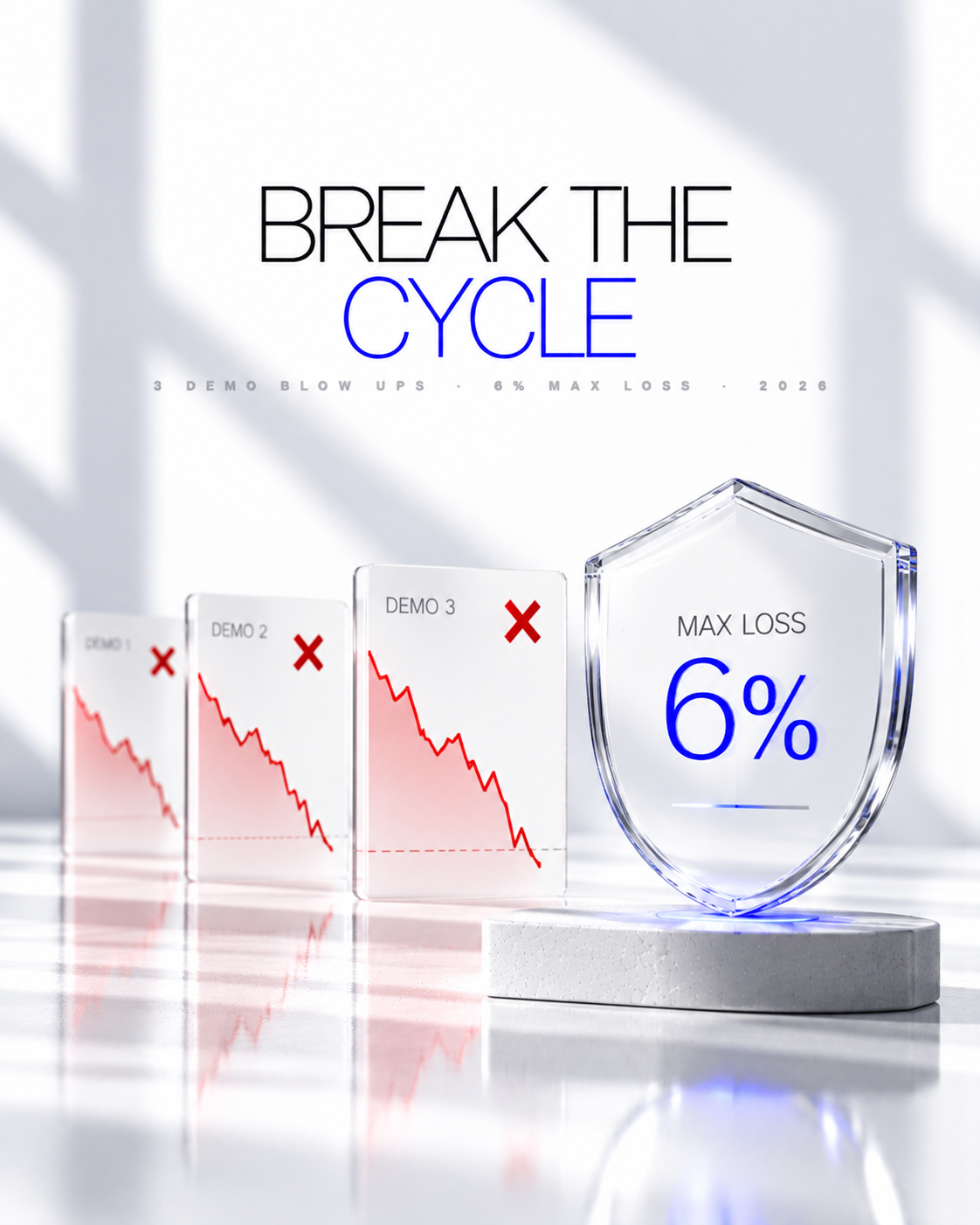
Blew Up 3 Times on Demo? Why the 6% Max Loss Rule Stops the Cycle (South Africa 2026)
12 min read

Risk Management
Risk Management Basics to Pass an Evaluation on the First Try
13 min read
Risk Management
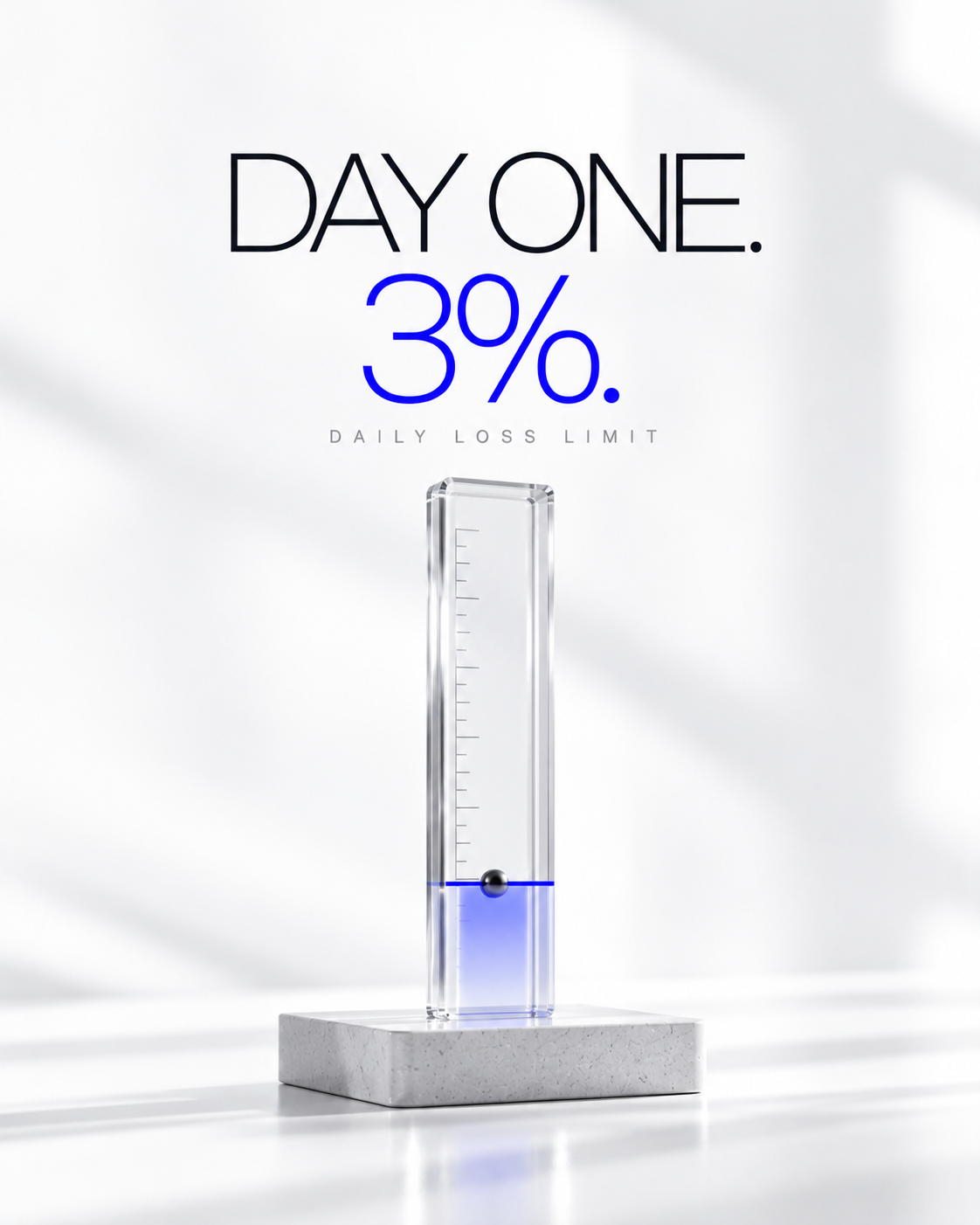
What Happens If You Trigger the 3% Daily Loss on Day 1? PropScholar Recovery Rules Explained (2026)
14 min read

Risk Management
Prop Firm Account Frozen After Profit? Why Lot Limits Exist and Why They Protect You
13 min read
Trading Conditions
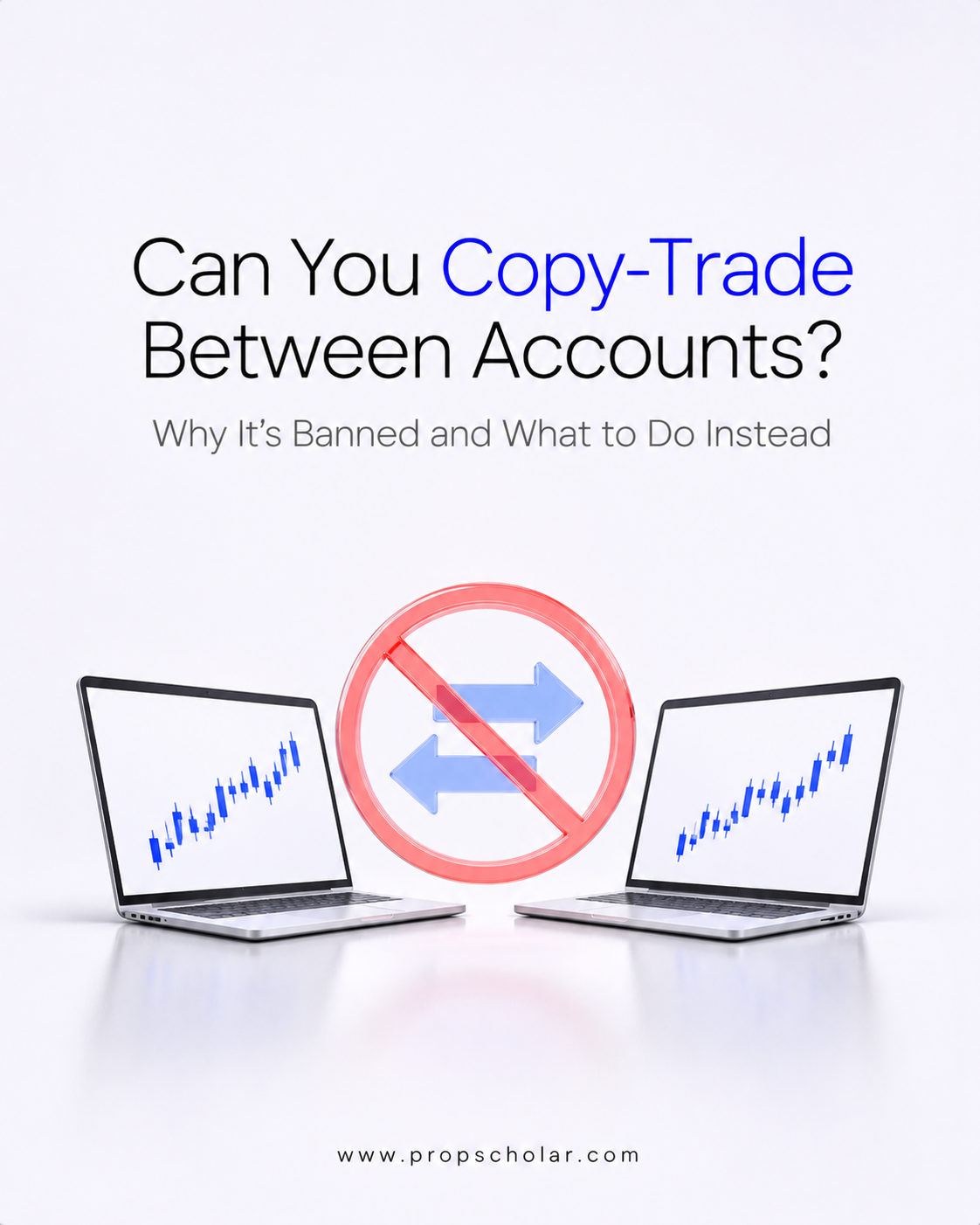
Can You Copy-Trade Between PropScholar Accounts? Why It's Banned and What to Do Instead
11 min read
Risk Management
Why Lot Limits Stop Overtrading Before It Starts
13 min read