
Can You Copy-Trade Between PropScholar Accounts? Why It's Banned and What to Do Instead
PropScholar explicitly bans copy trading between two of its own accounts. This post explains exactly why the rule exists, what happens if you break it, and the legitimate strategies that actually work for traders who want to run multiple accounts at the same time.
PropScholar explicitly bans copy trading between two of its own accounts. This post explains exactly why the rule exists, what happens if you break it, and the legitimate strategies that actually work for traders who want to run multiple accounts at the same time.
Start your evaluationCan You Copy-Trade Between PropScholar Accounts? Why It's Banned and What to Do Instead
TL;DR: No. PropScholar explicitly bans copy trading between two of its own accounts. If you do it, the account is in breach. Here's why the rule exists, what it actually costs you, and what legitimate alternatives work.
Key takeaways:
- Copy trading between two PropScholar accounts is banned under the platform's rules, no exceptions.
- Copying trades from an external source into a PropScholar account is not banned — only copying between two PropScholar accounts.
- The ban protects the integrity of independent evaluation and prevents one clever pass from generating unlimited free scholarship claims.
- You can run multiple PropScholar accounts simultaneously, as long as each one trades independently.
- There are real strategies — running different account sizes, different instruments, different timeframes — that give you scale without breaching any rule.
Here's a situation that comes up more often than you'd expect. A trader buys two PropScholar Freedom accounts — say a $5,000 and a $10,000 — and figures they'll just copy every trade from one to the other. Less work, same result, two scholarship payouts. Sounds efficient.
Then they check the rules and find out it doesn't work that way.
The copy trading ban is one of the most specific rules in PropScholar's terms, and it's worth understanding properly. Not just "it's banned, full stop," but why — because once you understand the logic behind it, the alternative approaches become obvious.
What PropScholar's Copy Trading Rule Actually Says
The rule is clear: copy trading is not allowed between two PropScholar accounts. That's the exact restriction. One PropScholar account mirroring another PropScholar account — through a trade copier, an EA, a signal relay, or manual duplication — is a breach.
What the rule does not say is that you can't use an external strategy, an external signal, or even an external expert advisor as long as it isn't copying from another PropScholar account. If you trade with an EA you built yourself that runs on your own logic, that's your trading strategy. If you follow a signal from an external source and place those trades manually, that's still your independent execution on that account. Neither of those scenarios involves two PropScholar accounts copying each other.
The specific, targeted ban is account-to-account duplication within the PropScholar ecosystem.
Why This Rule Exists — The Real Logic
PropScholar isn't a prop firm. It's a scholarship-based evaluation platform. The entire premise is that you demonstrate trading skill, and if you pass, PropScholar pays you a scholarship. The $20 scholarship on a $5,000 Freedom Account, the $42 on the $10,000, the $100 on the $25,000 — those exist because someone passed an evaluation through genuine trading.
Now think about what copy trading between accounts actually does. If a trader buys five PropScholar accounts and routes all five from a single master account, only one person is doing the actual trading. The other four are free passes. The scholarship model falls apart. The evaluation stops being an evaluation.
There's also a risk concentration problem. PropScholar allows you to hold positions over the weekend and sets specific lot limits per asset class. On a $10,000 Freedom Account, for example, you're capped at 4.00 lots in forex, 0.40 lots in gold, and 0.20 lots in BTCUSD — all concurrent, not cumulative, and you can't borrow headroom between classes. If a trader is running ten accounts and copying identical trades across all of them, the actual market exposure being accumulated across those accounts would be completely invisible to anyone looking at a single account in isolation. The lot limits, which exist for real reasons, become meaningless.
The copy trading ban is what keeps the evaluation honest and keeps the risk framework functional.
What Happens If You Break This Rule
Straight answer: the account that's in breach is invalidated. You don't get the scholarship on that account. The entry fee you paid is not refunded.
This isn't a warning system. It's a one-strike rule. PropScholar's terms are public at propscholar.com/terms-of-use and have never been changed retroactively — but that also means they're applied consistently. Traders who've passed an evaluation legitimately and then set up a copy relationship between that funded account and a new challenge account have lost both.
The mistake people make is thinking PropScholar won't notice. With a $5 entry fee it feels low-stakes. But the detection isn't manual — identical trade entry and exit timestamps, same instruments, same lot sizes across two accounts on the same platform are not hard to identify programmatically.
It's also worth noting: even if a breach were somehow missed during the evaluation phase, payout verification is a separate step, and identical trade histories across accounts are a red flag in that review too. Every payout is publicly verifiable at propscholar.com/payout-proof, which means the verification process is taken seriously.
Multiple PropScholar Accounts: What You Can Do
Here's where it gets interesting. The ban is specifically on copying between PropScholar accounts. It says nothing about running multiple accounts simultaneously. In fact, there's no purchase limit at all — you can buy as many Freedom Accounts as you want, in any combination of sizes.
So what does running multiple accounts legitimately look like?
Trade Different Instruments Across Accounts
You're a forex trader by strategy, but you also run a crypto setup. Run one Freedom Account where you trade forex and another where you trade BTCUSD and ETHUSD. The lot limits for each are independent — your 0.20 BTC cap on the $10,000 account is separate from your 4.00 forex lot cap. These aren't the same strategy on the same instrument. They're genuinely different trading activity. No copying involved.
Use Different Timeframes and Account Sizes
Maybe your scalping system works best on a $5,000 account where the smaller lot limits fit your position sizing, and your swing trading approach suits the larger $25,000 account. Buy both. Trade each with its own logic. You're not copying anything — you're running two distinct strategies with two different risk profiles.
This is actually how experienced traders scale. Not by cloning one good session across five accounts, but by building out genuinely separate approaches that fit different account sizes.
Treat Each Account as an Independent Evaluation
This is the mindset shift that matters. PropScholar's Freedom Challenge has no time limit, no minimum trading days, no minimum profitable days. The inactivity rule is 14 days, which means you have a lot of flexibility about when you trade. You can run a $5,000 account that you trade a few times a week, and a $10,000 account that you trade more actively, without either one interfering with the other. The 10% profit target is the same across all sizes. Each pass earns its own scholarship — $20 on the 5K, $42 on the 10K, and so on up to $200 on the $50,000.
If you pass multiple accounts independently, you collect multiple scholarships. That's the legitimate path to scaling.
The Deeper Point About Signal Groups and Copy Services
Some traders ask a related question: "Can I follow a Telegram signal group and trade those signals on my PropScholar account?" This is different from copying between two PropScholar accounts. Following external signals and executing them yourself, as your own independent trading decisions, is not banned under PropScholar's copy trading rule.
That said, there's a real risk in this approach that has nothing to do with PropScholar's rules. Signal groups are almost universally structured so that the person running the group profits from your subscription fee, not from their own trading. The signals may be inconsistent, may not account for your specific lot limits, and may trigger positions near high-impact news events — which is banned on PropScholar. Opening or closing a position within 10 minutes before or after a high-impact news release is a breach, regardless of where the trade idea came from.
If you're taking signals from an external source and one of those signals fires 8 minutes before a major NFP release, you've breached the account. The external signal provider doesn't bear that consequence. You do.
Trade signals can be useful reference points. But the moment you execute them on a PropScholar account, you're responsible for every rule they might touch.
A Note on EAs and Automated Systems
PropScholar doesn't ban automated trading. If you've built or licensed an expert advisor that runs on your account based on its own logic, that's your trading system. The rule is about copying from another PropScholar account, not about automation in general.
What you can't do is set up an EA whose only function is to replicate the trades of your other PropScholar account in real time. The mechanism — whether it's a manual copy, a trade copier plugin, or a custom EA relay — doesn't change the nature of the breach. If two PropScholar accounts end up with identical trades because one is mirroring the other, the rule is broken regardless of how the copying happened.
If you're running an automated system, make sure it's generating its own signals independently, not pulling from another account on the same platform.
Why PropScholar's Multi-Account Structure Is Actually Worth Using
The legitimate multi-account approach is genuinely worth considering, especially at these entry prices. A $5,000 Freedom Account costs $5. A $10,000 costs $10. If you have two distinct strategies — say, a trend-following forex system and a range-trading approach on gold — you can run both for $15 total. Each account has the same 10% profit target, the same 6% maximum loss, the same 1:50 leverage. Each passes or fails independently.
The fastest recorded pass on a PropScholar Freedom Account is 2 hours. That's not a guarantee of anything — most traders don't pass in 2 hours — but it tells you the evaluation structure genuinely allows fast completions when the conditions are right. And every payout processes within 4 hours of the request being made.
Scaling through multiple independent accounts, paying $5 to $50 per account, is a completely different proposition from paying $200 or $400 to a traditional evaluation platform and then hoping the rules don't change. The copy trading ban isn't a restriction on scale — it's a restriction on fake scale. Real scale, through genuinely independent strategies on multiple accounts, is wide open.
The Practical Summary
If you came here because you were thinking about routing your trades across two PropScholar accounts — don't. The breach isn't worth the risk, especially when the alternative is just running each account on its own logic.
If you're running different strategies, different instruments, or different timeframes across separate accounts, you're not in violation of anything. Buy as many accounts as you want. Trade them independently. Each pass earns its own scholarship, paid within 4 hours.
And if you're not sure whether a specific setup would count as copy trading between PropScholar accounts, the safest move is to ask directly at business@propscholar.com before you start, not after a potential breach.
The rules at PropScholar have never been changed retroactively. That consistency is part of why the platform has built the trader community it has. The copy trading ban is one rule in a ruleset that's otherwise quite trader-friendly — no time limit, no minimum days, weekend holding allowed. Work within it, not around it.
PropScholar is a scholarship-based trading evaluation platform operated by a Private Limited company registered in India. We are not a prop firm and do not manage or allocate institutional capital. Our model rewards proven trading skill with scholarship grants upon successful evaluation completion.
Related reading
- Alternatives to Prop Firms That Ban News Trading and Limit Lot Sizes
- bKash to USDT for Trading Evaluations: Bangladesh 2026 Guide
- Forex vs Gold: Which Has Looser Lot Limits on the Freedom Account? Nigeria USDT Guide (2026)
- Rupiah to USDT 2026: Fund a Trading Evaluation Under $5
- The Consistency Rule: What It Means and How to Pass It
- USDT Crypto Trading Challenge Egypt 2026: $5 Phone-Only Entry
Ready to Prove Your Edge?
Join 500+ traders. Start from just $5. Get funded within days.
Frequently Asked Questions
No. PropScholar explicitly bans copy trading between two of its own accounts. If your trades on one PropScholar account are being mirrored to another PropScholar account — through any method — both accounts are in breach. The account found to be copying is invalidated and no scholarship is paid. The entry fee is not refunded. This rule applies regardless of account size.
More From PropScholar

Scholarship Model
Scholarship Model vs Commission Trap: Why PropScholar's $20–$200 Payout on Pass Beats Affiliate Rebate Schemes
12 min read

Trading Conditions
News Trading Ban on Funded Accounts: What Prop Firms Protect—Kenya USDT Guide
15 min read
Trading Conditions
14-Day Inactivity Rule on Funded Accounts: What 'No Minimum Trading Days' Really Means
12 min read
Trading Conditions
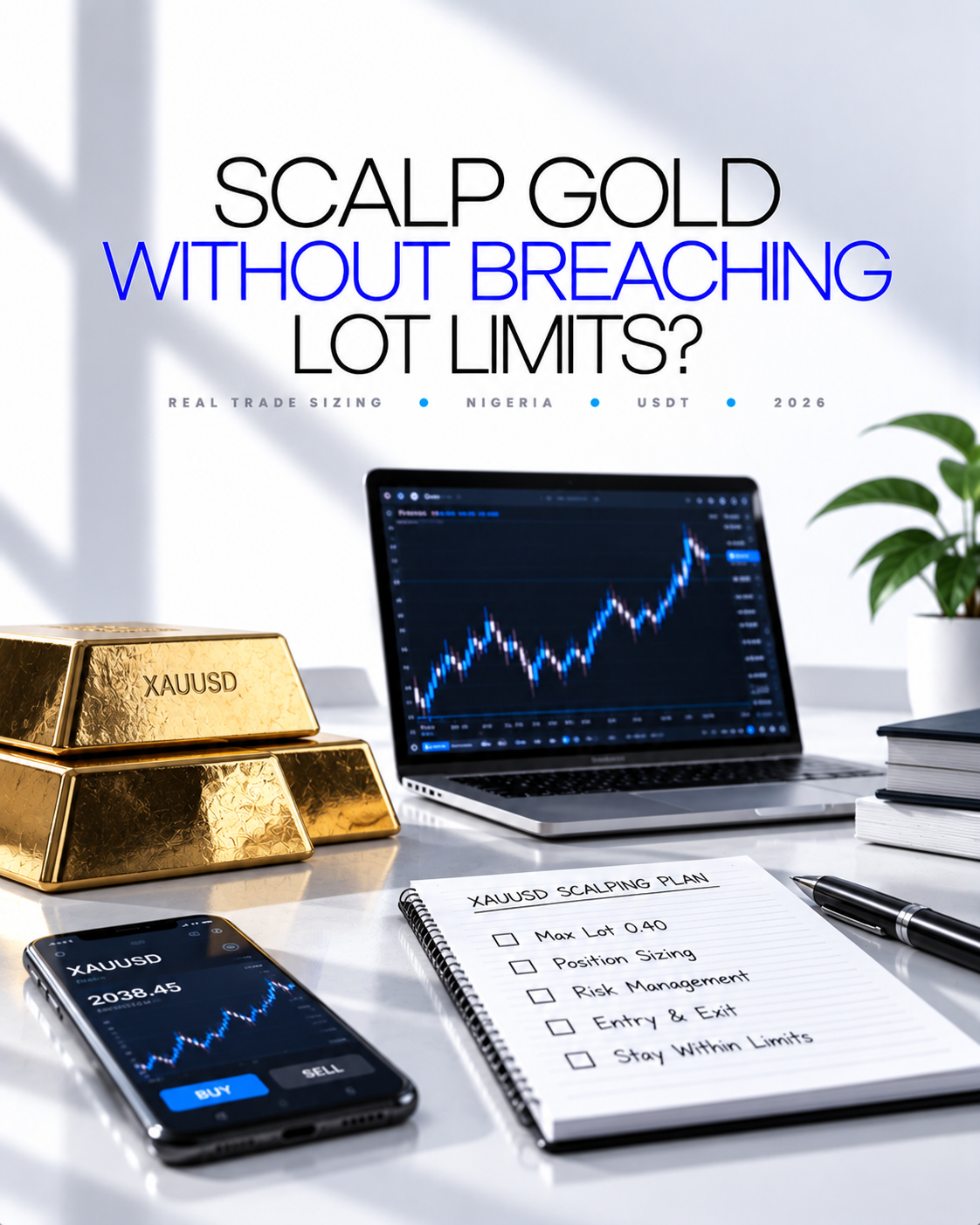
Can You Scalp Gold Without Hitting Lot Limits? Real Trade Sizing for PropScholar's 0.40 Maximum—Nigeria USDT Guide (2026)
11 min read

Trading Conditions
Night Shift Call Centre Worker in Bangladesh: Trading USDT Funded Accounts on 2-Hour Sleep Windows (2026)
12 min read
Trading Conditions
Can You Trade the Same Forex Pair Twice? Lot Limits for Pakistani Traders
14 min read