
Lost Money on a Prop Firm 'Instant Funding' Account? Why the $5 Freedom Challenge Won't Trap You the Same Way
Instant funding accounts promise access with no evaluation — but the hidden rules, inflated fees, and sudden breach conditions have caught out thousands of traders. If you've already lost money to one, this article explains exactly what went wrong and why the $5 PropScholar Freedom Challenge is structurally different: published rules, one clear target, payouts in 4 hours, and an entry cost so smal
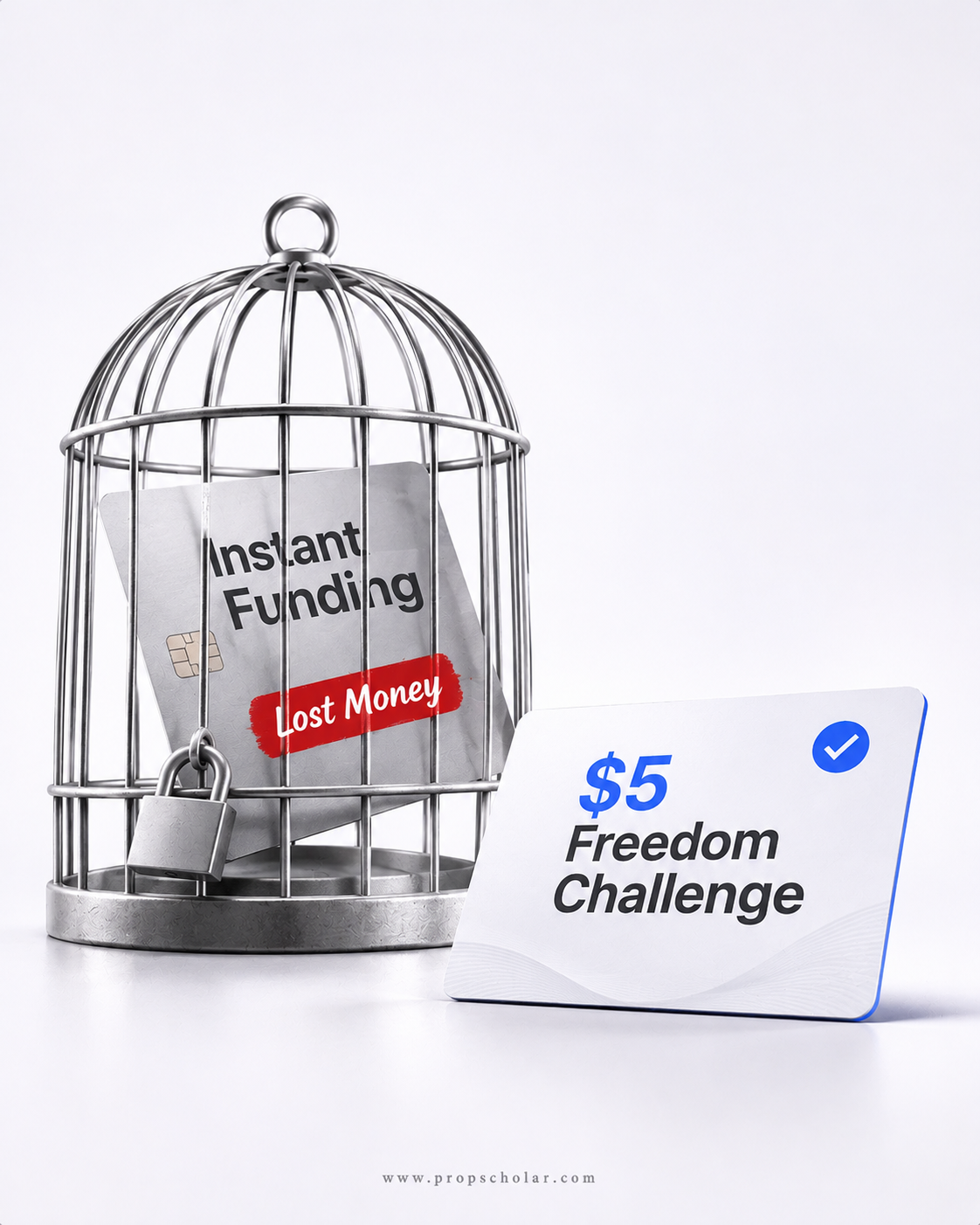
Instant funding accounts promise access with no evaluation — but the hidden rules, inflated fees, and sudden breach conditions have caught out thousands of traders. If you've already lost money to one, this article explains exactly what went wrong and why the $5 PropScholar Freedom Challenge is structurally different: published rules, one clear target, payouts in 4 hours, and an entry cost so smal
Start your evaluationLost Money on a Prop Firm 'Instant Funding' Account? Why the $5 Freedom Challenge Won't Trap You the Same Way
TL;DR: Instant funding accounts charge premium prices and bury breach conditions that are almost impossible to avoid. The PropScholar Freedom Challenge costs $5, has one clearly stated target, fully published rules, and pays out within 4 hours. The trap you fell into doesn't exist here.
Key takeaways:
- Instant funding sounds like a shortcut but typically costs far more than a standard challenge and embeds stricter hidden drawdown rules
- Getting breached on day one is common — not because you traded badly, but because the rules were designed to catch you
- The Freedom Challenge has a single 10% profit target, a 6% max loss, no time limit, and no minimum trading days
- Entry starts at $5 — if you lose it, you haven't lost a month's groceries
- Every payout is publicly verifiable; PropScholar has never changed a rule retroactively
You paid the fee. You read what felt like a reasonable summary. Then somewhere between day two and day ten, your account was breached — sometimes before you'd even had a losing day that felt significant. If that's happened to you, you're not alone, and you almost certainly didn't trade badly. The structure was working against you from the moment you paid.
This isn't a generic warning about the prop firm industry. It's a specific breakdown of why instant funding accounts are built differently from evaluation challenges — and why the $5 PropScholar Freedom Challenge is structured in a way that removes the financial trap you just experienced.
What "Instant Funding" Actually Means (And Why It Costs More Than You Think)
Instant funding means you skip the evaluation and trade a "live" or simulated account from day one. The pitch is obvious: no test, no waiting, just trade. But the pricing tells the real story.
Because there's no evaluation filter, instant funding accounts charge a significantly higher recurring fee — often monthly — to compensate for the fact that the firm has no information about your trading quality. You're essentially paying a premium for the privilege of skipping a step that actually benefits you.
Then come the rules. Instant funding products frequently carry tighter drawdown thresholds than standard evaluation challenges, sometimes with trailing drawdowns rather than static ones. A trailing drawdown follows your peak equity — so if you run a profit and then give some back, your breach level has already moved against you. Depending on how it's calculated, a few normal trading days can shrink your cushion to almost nothing even if you're net positive.
And the news trading restrictions? In many cases they apply to instant accounts too, but they're buried in the terms. Close a trade thirty seconds after a data release and you're done. The activation fee shock some traders discover after passing is a separate but related problem: even when you do everything right, the costs keep appearing.
The Specific Ways Instant Funding Accounts Breach Traders Who Shouldn't Be Breached
This is where it gets concrete. Three mechanics cause most of the damage:
Trailing drawdown on a small buffer. If your breach level moves upward every time your equity rises, then a normal pullback after a good day can hit your limit. You didn't blow up. The drawdown moved into your profit.
Ambiguous daily loss calculation. Some platforms calculate your daily loss from your balance at midnight, others from your highest intraday equity. If it's the latter and you open a position that temporarily shows a floating profit before moving against you, your effective daily cushion is smaller than the stated percentage suggests.
News trading that isn't defined clearly enough to follow. If the rule says "no trading around high-impact news" without specifying exactly which events count, which calendar source is used, and what happens to stops and take-profits already in the market — you're trading blind on the most volatile days of the week.
None of these are theoretical edge cases. They're the most common reasons traders contact us after losing money elsewhere. The fake payout proof problem is a separate issue, but it compounds the same underlying dynamic: when rules aren't transparent and payouts aren't publicly verifiable, the trader carries all the risk.
How the Freedom Challenge Is Built Differently
The Freedom Challenge at PropScholar is a one-step evaluation. You pay the entry fee, trade to a 10% profit target, stay within the drawdown rules, and claim your scholarship. That's the entire structure.
Here are the actual numbers, stated plainly:
The profit target and loss limits are static and simple
You need 10% profit on your account size. Your maximum total loss is 6% of the initial account balance — not trailing, not recalculated, just 6% of the number you started with. Your daily loss limit is 3% of the higher of your starting equity or current balance. Both numbers are fixed in the terms and have never been changed retroactively.
No time pressure, no minimum days requirement
There is no deadline. The fastest recorded pass on a Freedom Account is 2 hours — but you could also take three months. No one is rushing you. There are no minimum trading days and no requirement to have a certain number of profitable days. You trade when your setup is there.
The news trading rule is precisely defined
You cannot open or close positions from 10 minutes before to 10 minutes after a high-impact news event. That includes stop-loss and take-profit closes. It's strict — but it's specific. You know exactly what it means, which means you can follow it. Vague rules are what catch traders who are trying to do the right thing.
The lot limits are real and you should know them
On a $10,000 Freedom Account: 4.00 forex lots, 0.40 gold, 1.00 silver, 0.20 BTCUSD, 1.00 ETHUSD, 2.00 other crypto, 0.50 NAS100, 0.30 US30, 0.75 US500, 0.50 other indices. These are maximum open lots per asset class at any one time — not cumulative, not shared between classes. If you've come from an instant funding account that promised unlimited sizing, this is the honest trade-off. It's also why the rest of the structure is achievable.
Entry costs $5, not $150
The Freedom 5K costs $5. The 10K costs $10. One dollar per thousand dollars of account. If you're outside India and paying in USDT — which is how most traders in Nigeria, the Philippines, Indonesia, Pakistan, Kenya, Ghana, and South Africa actually pay — you buy USDT on a P2P exchange funded by a local transfer, then pay us directly. No bank correspondent fees, no credit card surcharges. The scholarship on a 5K pass is $20; on a 10K it's $42.
You can buy as many accounts as you want, in any size. If your first attempt doesn't go as planned, you're not locked out.
Why Transparent Payout Proof Changes Everything
One thing that gets underestimated: when you can't verify that a platform actually pays, every breach feels suspicious. Was it a legitimate rule violation, or a reason to avoid paying out?
Every PropScholar payout is publicly verifiable at propscholar.com/payout-proof. You can look at the transaction before you buy the challenge. Payouts are processed within 4 hours of a request being submitted. That's the actual commitment, not a vague "within a few business days."
We have 3,000+ traders in our Discord community at discord.gg/uTU85z4hft. That's not a marketing number — it's a real community where you can ask people directly about their experience, including payout timelines. That kind of verification is something you should be doing before you pay any evaluation platform.
A Direct Comparison: Instant Funding vs Freedom Challenge
On cost and structure
Instant funding accounts typically charge monthly or recurring fees that can reach several times the cost of a standard evaluation over a few months. The Freedom Challenge has a one-time entry fee starting at $5, with a scholarship paid on pass. There's no ongoing cost and no activation fee after passing.
On rule transparency
Instant funding products often distribute rules across multiple documents, FAQ pages, and terms updates. PropScholar publishes its complete ruleset at propscholar.com/terms-of-use and has never changed a rule retroactively. The difference between knowing your rules and discovering them when you're breached is not a small thing.
On who carries the financial risk
In an instant funding model, the trader pays a premium fee and absorbs the risk of a breach under conditions they may not have fully understood. In the Freedom Challenge, the entry cost is $5 to $50. If you breach, you're not recovering from a $200 loss — you're buying a $5 retry.
If You've Already Lost Money: What to Do From Here
First: document everything. Screenshot your trade history, the rules you were given at signup, and the breach notification. If the stated rules and the breach decision don't match, you have grounds to dispute. If you think payout proof was fabricated, here's how to verify it properly.
Second: don't rush back in. The instinct after a loss is to recover it quickly. That's the same instinct that makes Telegram signal groups and expensive mentors look appealing right now — and it's the same instinct those services are designed to exploit. Take a week before you spend another dollar.
Third: when you're ready to try again, choose a structure where the entry fee is small enough that a breach doesn't hurt you financially, the rules are specific enough that you can actually follow them, and the payout history is public enough to verify before you pay. That's what we built the Freedom Challenge to be.
The One Thing Instant Funding Gets Right (And How to Get It Without the Trap)
The genuine appeal of instant funding is speed. You want to trade now, not in six weeks. The Freedom Challenge has no time limit and no minimum trading days — which means you can pass it in a day if the market gives you clean setups. The fastest recorded pass is 2 hours. Speed doesn't require skipping the evaluation. It requires a structure that doesn't artificially slow you down.
PropScholar is a scholarship-based evaluation platform, not a prop firm. We don't manage institutional capital. We evaluate trading skill and pay scholarships to traders who prove it. The model is transparent, the fees are verifiable, the rules are published, and the entry costs $5. That's the alternative to what you just went through.
PropScholar is a scholarship-based trading evaluation platform operated by a Private Limited company registered in India. We are not a prop firm and do not manage or allocate institutional capital. Our model rewards proven trading skill with scholarship grants upon successful evaluation completion.
Related reading
- Are Free Funded Accounts Real? What 'Free' Prop Offers Actually Cost You
- Is PropScholar Legit or Fake? The Honest 2026 Review Every Trader Should Read Before Paying
- Is PropScholar Legit? An Honest Review With Payout Proof
- UPI Funding Cap Trap: Why Indian Prop Traders Lose Money Before They Start (2026)
- How to Check If a Prop Firm Is Registered and Trustworthy
- The Safest Way for a College Student to Start Trading and Not Lose Money
Ready to Prove Your Edge?
Join 500+ traders. Start from just $5. Get funded within days.
Frequently Asked Questions
Most instant funding accounts use trailing drawdowns that follow your peak equity, meaning a normal pullback after a profitable day can trigger a breach even if you're net positive. Combined with ambiguous daily loss calculations and vague news trading rules, the structure catches traders who are trying to follow the rules but don't know exactly what they are.
More From PropScholar

Trader Safety
Are Prop Firm Bootcamp Accounts a Scam? What the Cheap Entry Fee Really Costs You in 2026
16 min read
Trader Safety
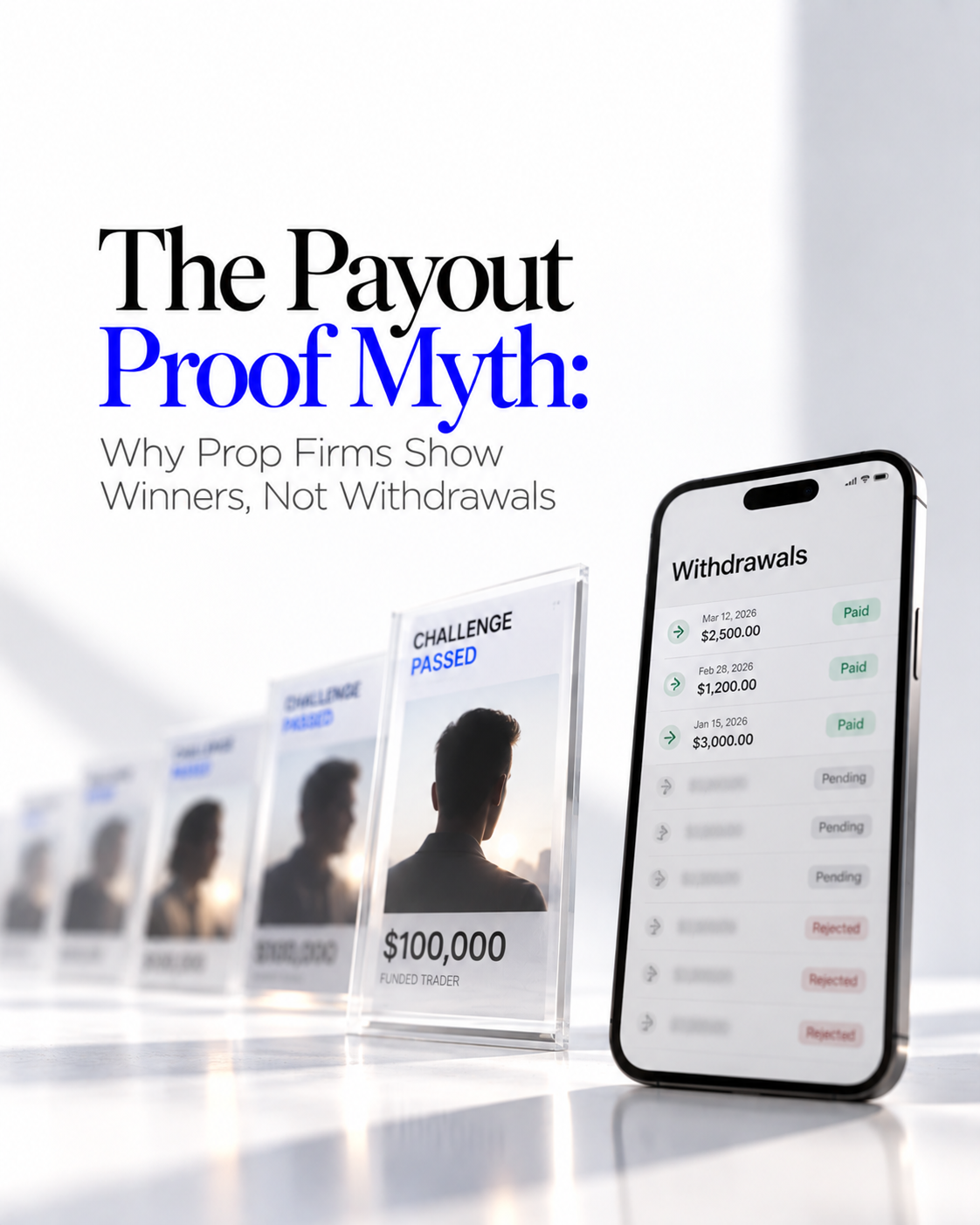
The Payout Proof Myth: Why Prop Firms Show Winners, Not Withdrawals
11 min read

Trader Safety
How to Avoid Scam Prop Firms and Choose a Top-Tier Firm on a Small Budget in 2026
17 min read

Trader Safety
How to Avoid Prop Firm Scams in 2026: A PropScholar Checklist
12 min read
Trader Safety
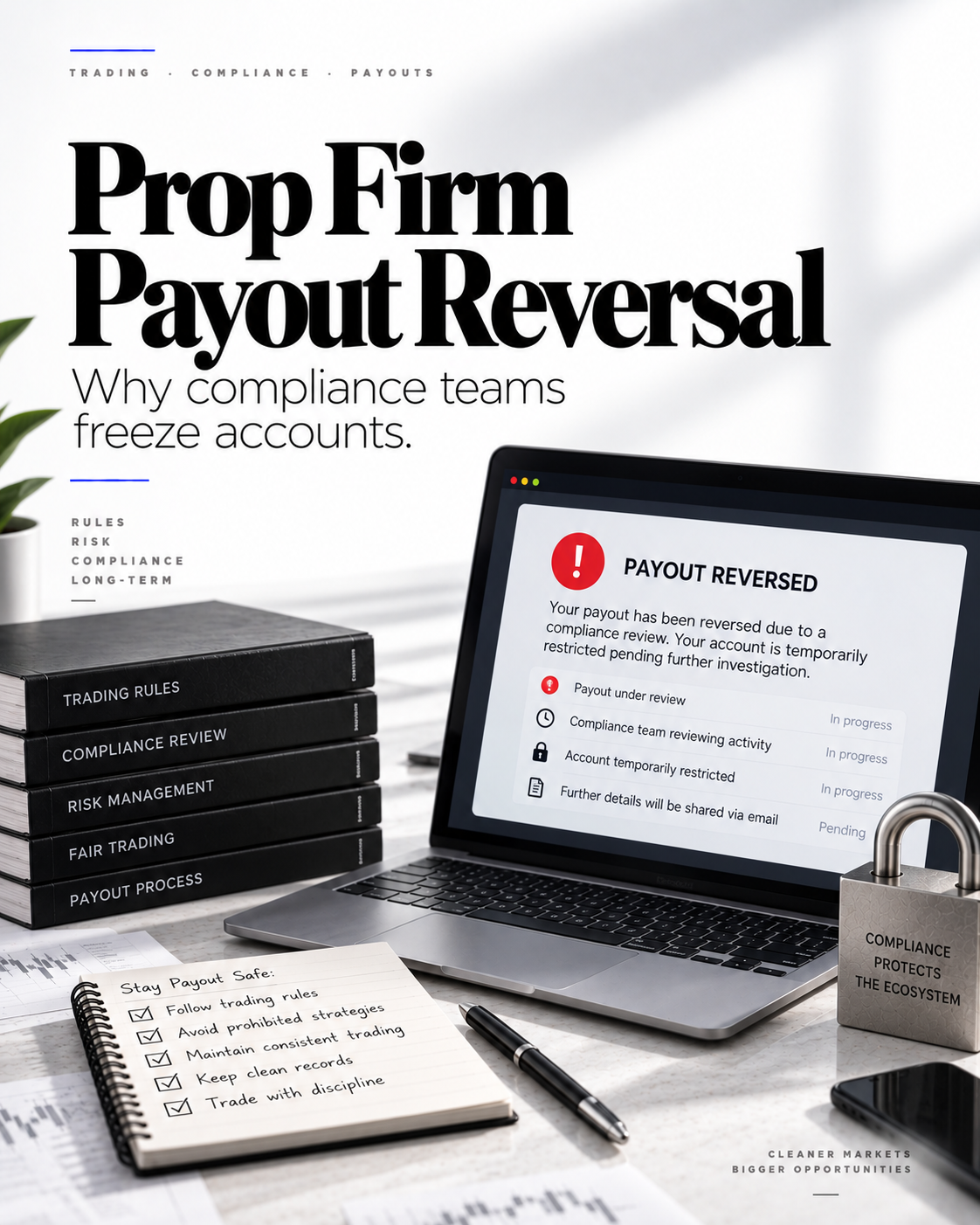
Prop Firm Payout Reversal: Why Compliance Teams Freeze Accounts
14 min read

Evaluation Models
Free Prop Firm Trials Are a Sales Funnel: What Rs.499 Gets You Instead
13 min read