
Are Prop Firms FCA Regulated? What UK Traders Should Check Before Paying in 2027
Most prop evaluation firms are not FCA authorised, and that surprises a lot of UK traders who assume any financial platform needs a licence. Here is what the gap actually means for your money, five checks that matter more than a licence, and how to use the FCA warnings list before you pay a penny.
Most prop evaluation firms are not FCA authorised, and that surprises a lot of UK traders who assume any financial platform needs a licence. Here is what the gap actually means for your money, five checks that matter more than a licence, and how to use the FCA warnings list before you pay a penny.
Start your evaluationAre Prop Firms FCA Regulated? What UK Traders Should Check Before Paying in 2027
TL;DR: Almost no prop evaluation firm is FCA authorised, and that is not a loophole they found yesterday. It reflects how their model works legally. What matters for your safety is not a licence, but five verifiable checks you can run in under ten minutes before paying any fee.
Key takeaways:
- Prop evaluation firms are not regulated by the FCA because the trader does not invest money with them in the legal sense. No FCA authorisation exists for most of them, and the FCA itself has warned about clone and unauthorised firms using similar names.
- A 2026 UK Parliament petition asking for FCA regulation of prop evaluation firms closed with very few signatures, so the regulatory gap remains open.
- You have no FSCS protection and no Financial Ombudsman route for a lost evaluation fee.
- Five checks replace the licence: a verifiable company registration, written rules published before you pay, an explicit simulated-account disclosure, public payout proof, and a payment method with buyer protection.
- PropScholar is a scholarship-based trading evaluation platform, not a prop firm, operated by a registered company (CIN U85499JH2026PTC027330). It passes all five checks and accepts Revolut Pay for UK traders.
You typed your card details, paid the fee, and then a friend asked whether the platform was FCA regulated. You assumed it must be. It handles money, it's about trading, surely someone overseas it.
Here is the honest answer, and it is not what most articles tell you.
Why Prop Evaluation Firms Are Not FCA Authorised
The FCA regulates firms that deal in investments, hold client money, or give regulated financial advice. A prop evaluation firm does none of those things, legally speaking. You pay an entry fee to take a trading test on a simulated (demo) account. No real money is traded. The firm does not hold your capital or invest it. Because you are paying for an assessment service, not placing money into a financial product, the activity sits outside the FCA's regulatory perimeter.
This is not a technicality that clever lawyers invented. It is consistent with how the FCA itself defines regulated activity. The FCA has published a warning page specifically about funded trader programmes, noting that many use names or branding similar to authorised firms and that consumers have no FSCS protection or access to the Financial Ombudsman when things go wrong.
That warning page matters. Keep it bookmarked.
In 2026, a UK Parliament petition called for the FCA to extend regulation to prop evaluation firms. It closed with very few signatures, which tells you two things: the political appetite is low, and the regulatory gap is not closing any time soon. You can read the petition record yourself at petition.parliament.uk. The practical implication is that the burden of due diligence falls entirely on you, the trader, right now.
What the FCA Gap Means for Your Money
If a regulated broker goes insolvent, the FSCS covers eligible claims up to £85,000. If a prop evaluation firm disappears with your fee, there is no FSCS claim. There is also no Financial Ombudsman Service route for the evaluation fee itself, because the firm is not providing a regulated service.
This does not mean every prop evaluation firm is fraudulent. It means the safety net that UK consumers expect when dealing with financial platforms does not apply here. Your practical protections are different, and knowing what they are is the whole point of this article.
One more thing worth saying plainly: if the law or tax treatment of your trading income concerns you, speak to a qualified accountant or solicitor in the UK. This article is not legal or tax advice, and PropScholar's existing guide on prop firm payouts and HMRC in 2027 covers the HMRC angle separately.
The Five Checks That Replace a Licence
Because an FCA number is not available, you need to do your own verification. These five checks are what a careful UK trader should run on any platform before paying.
Check one: a verifiable company registration
Any legitimate business has a company number you can look up in a public register. For a UK company, that is Companies House. For a foreign company, it is the equivalent registry in its home country. The number should be on the platform's website, not buried in small print. If you cannot find it, or if searching the registry returns nothing, walk away.
PropScholar is operated by PropScholar Private Limited, registered in India under CIN U85499JH2026PTC027330. That number is real and verifiable through the Indian Ministry of Corporate Affairs.
Check two: rules published before you pay
Every rule governing the evaluation should be on a public terms page before you hand over money. Look specifically for: the profit target, the maximum loss limit, the daily loss limit, any news trading restriction, and what triggers account closure. If the rules are vague, change without notice, or only appear after payment, that is a serious warning sign.
PropScholar's full ruleset is at propscholar.com/terms-of-use. The Freedom Account rules are specific: 10% profit target, 6% maximum loss of initial account size, 3% daily loss limit based on the higher of starting equity or current balance, no time limit, no minimum trading days, weekend holding allowed, and no opening or closing trades from ten minutes before to ten minutes after a high-impact news event. That last rule is strict: even a stop-loss or take-profit hitting in that window counts as a breach. There are also lot limits per asset class (for example, on a $10,000 account: 4.00 lots forex, 0.40 lots gold, 0.20 lots BTCUSD). These limits are concurrent, not cumulative, and you cannot borrow headroom from one asset class for another.
This is the one real restriction that is worth naming plainly, because a list of benefits with no trade-offs reads like marketing.
Check three: explicit simulated-account disclosure
A legitimate evaluation platform states clearly that the trading account is simulated. No real money is traded during the evaluation. If a platform implies you are trading live institutional capital at the evaluation stage, that claim should raise an immediate question.
Every PropScholar evaluation runs on a demo account. The scholarship is paid from PropScholar's own funds on a successful pass, not from trading profits.
Check four: public payout proof
Anyone can write a testimonial. Public, timestamped payout records with real amounts are harder to fabricate. Look for a dedicated page, not just a screenshot in a Telegram group.
PropScholar publishes every payout at propscholar.com/payout-proof. You can cross-reference amounts and dates before you pay. For more context on how to read payout proof correctly, the guide on how to verify PropScholar's real withdrawal proof walks through the process step by step.
Check five: a payment method with buyer protection
This is the check most traders skip. If you pay by card (Visa or Mastercard), you have a chargeback option if the service is not delivered as described. That is a real, practical protection even without FCA oversight. PayPal offers a similar dispute route. Crypto payments, by contrast, are irreversible.
For UK traders, PropScholar's payment page accepts Visa, Mastercard, Google Pay, Apple Pay, and Revolut Pay. The price appears in pounds sterling with taxes included. Paying by card gives you chargeback rights as a fallback.
Always Check the FCA Warnings List
The FCA maintains a public register of authorised firms at register.fca.org.uk. It also publishes a warnings list of clone and unauthorised firms. Before paying any evaluation platform, search both. The warnings list has included firms with names that sound like funded trader programmes. If you find a firm on that list, the FCA is telling you explicitly that it is not authorised and that consumers have been warned.
Not finding a firm on the warnings list does not mean it is safe. It means the FCA has not flagged it yet. The five checks above still apply.
How PropScholar Answers Each Check
PropScholar is not a prop firm. It is a scholarship-based trading evaluation platform. The distinction is not branding. It reflects the actual model: you pay a small fee, complete a simulated trading evaluation, and if you pass, you receive a scholarship payment from PropScholar's own funds.
On company registration: PropScholar Private Limited holds CIN U85499JH2026PTC027330, registered in India. On written rules: the full terms are public at propscholar.com/terms-of-use, unchanged retroactively. On simulated-account disclosure: every evaluation is explicitly on a demo account, stated before purchase. On payout proof: every payment is logged at propscholar.com/payout-proof, processed within four hours of a request. On payment protection: UK traders can pay by card or Revolut Pay, both of which carry dispute rights.
The honest catch: most traders fail evaluations, PropScholar's included. The entry fee can be lost. A $5 Freedom 5K entry pays a $20 scholarship on a pass, but a pass is not guaranteed. That risk is real, and you should go in knowing it.
Payouts outside India are paid to a crypto wallet (USDT). UK traders should set up a wallet address in their dashboard before requesting a payout.
For a broader look at how one trader built from a small starting payout across multiple platforms, this detailed account of one Indian trader's real path gives useful context on what a realistic progression looks like.
Your Pre-Payment Checklist
Before paying any prop evaluation fee as a UK trader, run through this:
Company number visible and verifiable. Search the number in the relevant public registry. It should return a real, active company.
All rules published on a public page before payment. Profit target, loss limits, daily limit, news rule, lot limits. Everything in writing.
Explicit confirmation the evaluation uses a simulated account. Not implied. Stated.
Public payout records you can inspect before paying. Not screenshots. A dedicated, timestamped ledger.
Payment method with a dispute route. Card (Visa or Mastercard), PayPal or Revolut Pay in the UK. Keep the receipt.
FCA warnings list searched. Check register.fca.org.uk/warnings. Takes two minutes.
If a platform you are considering fails two or more of these, the answer is to find one that does not.
Frequently Asked Questions
Are prop firms regulated by the FCA in the UK? Almost none are. Prop evaluation firms do not hold client money or deal in regulated investments: they sell access to a trading test on a simulated account. That activity sits outside the FCA's regulatory perimeter. The FCA has published its own warning page about funded trader programmes, confirming that consumers have no FSCS or Financial Ombudsman protection for lost evaluation fees.
Does PropScholar have an FCA licence? No, and it does not claim one. PropScholar is a scholarship-based trading evaluation platform operated by PropScholar Private Limited, a company registered in India (CIN U85499JH2026PTC027330). It is not a prop firm and does not manage or allocate institutional capital. Its terms are public, its rules have never changed retroactively, and every payout is listed at propscholar.com/payout-proof.
What protection do I have as a UK trader paying an evaluation fee? You have no FSCS cover and no Financial Ombudsman route for the fee itself. Your practical protection comes from paying by card or Revolut Pay (both carry chargeback or dispute rights), checking the FCA warnings list before paying, and verifying company registration, public rules and payout proof before you hand over money.
Is my evaluation fee refundable if I fail? Evaluation fees are not refunded on a failed challenge. That is standard across the industry and is stated in PropScholar's terms before purchase. The entry fee for a Freedom 5K is $5. You should treat it as the cost of a learning exercise, not a guaranteed path to a payout.
How do UK traders pay PropScholar and receive payouts? UK traders can pay using Visa, Mastercard, Google Pay, Apple Pay, or Revolut Pay. The price appears in pounds sterling on the payment page with taxes included. Payouts for traders outside India are sent to a USDT crypto wallet address set in the trader's dashboard. PropScholar does not send bank wires or PayPal payments to UK addresses.
What is the cheapest PropScholar evaluation available to UK traders? The Freedom 5K costs $5 and pays a $20 scholarship on a successful pass, processed within four hours. The evaluation is one step: 10% profit target on a $5,000 simulated account, 6% maximum loss, 3% daily loss limit, no time limit and no minimum trading days.
Can I trust a prop evaluation firm that is not FCA regulated? Regulation is not the only measure of trustworthiness. Run the five checks: verifiable company registration, written rules published before payment, simulated-account disclosure, public payout proof, and a payment method with a dispute route. A firm that passes all five is operating transparently regardless of regulatory status. One that fails multiple checks is a risk, licence or not.
PropScholar is a scholarship-based trading evaluation platform operated by a Private Limited company registered in India. We are not a prop firm and do not manage or allocate institutional capital. Our model rewards proven trading skill with scholarship grants upon successful evaluation completion.
Related reading
- Are Free Funded Accounts Real? What 'Free' Prop Offers Actually Cost You
- Is PropScholar Legit or Fake? The Honest 2026 Review Every Trader Should Read Before Paying
- UPI Funding Cap Trap: Why Indian Prop Traders Lose Money Before They Start (2026)
- Is PropScholar Legit? An Honest Review With Payout Proof
- How to Check If a Prop Firm Is Registered and Trustworthy
- The Safest Way for a College Student to Start Trading and Not Lose Money
Ready to Prove Your Edge?
Join 500+ traders. Start from just $5. Get funded within days.
Frequently Asked Questions
Almost none are. Prop evaluation firms do not hold client money or deal in regulated investments: they sell access to a trading test on a simulated account. That activity sits outside the FCA's regulatory perimeter. The FCA has published its own warning page about funded trader programmes, confirming that consumers have no FSCS or Financial Ombudsman protection for lost evaluation fees.
More From PropScholar
Trader Safety
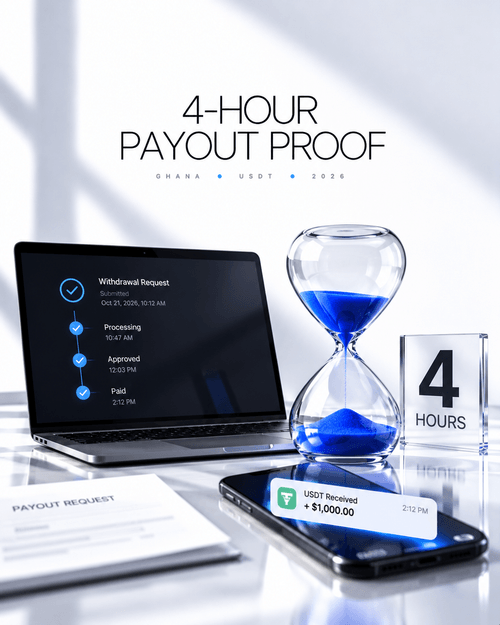
Why Prop Firms Promise Instant Payouts but PropScholar Publishes 4-Hour Proof Instead (Ghana USDT 2026)
10 min read
Trader Safety
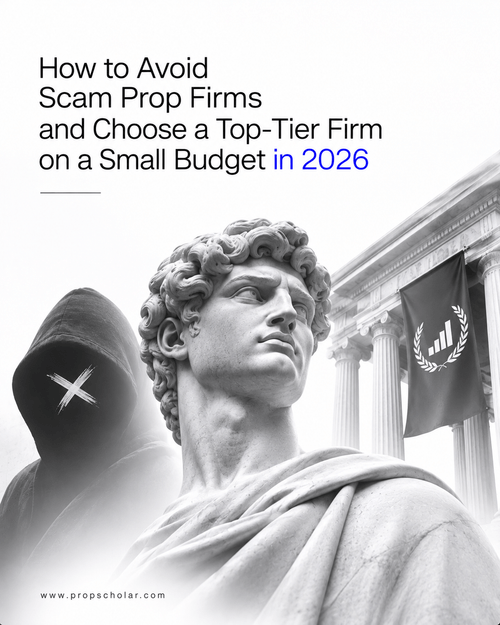
How to Avoid Scam Prop Firms and Choose a Top-Tier Firm on a Small Budget in 2026
17 min read

Trading Comparison
Prop Firms That Still Accept US Traders in 2027: What Changed After the 2024 MT5 Shutdown
13 min read

Trader Safety
Does PropScholar Really Pay Out? Live Payout Proof for Pakistan USDT Traders (2026)
13 min read

Trader Safety
Are Prop Firm Bootcamp Accounts a Scam? What the Cheap Entry Fee Really Costs You in 2026
16 min read

Trader Safety
How to Avoid Prop Firm Scams in 2026: A PropScholar Checklist
12 min read