
Best Pay After Pass Prop Firm 2026 — And Why You Should Skip Them
Pay after pass prop firms sound like a dream: trade for free, only pay if you win. But read the fine print and the dream collapses fast. Hidden fees, brutal live-account rules, and charges on the pass itself — here's how the model actually works, and why PropScholar's $5 evaluation beats it for serious traders in 2026.

Pay after pass prop firms sound like a dream: trade for free, only pay if you win. But read the fine print and the dream collapses fast. Hidden fees, brutal live-account rules, and charges on the pass itself — here's how the model actually works, and why PropScholar's $5 evaluation beats it for serious traders in 2026.
Start your evaluationBest Pay After Pass Prop Firm 2026 — And Why You Should Skip Them
TL;DR: Pay after pass prop firms are not free. You pay eventually — through deferred fees, inflated renewal charges, or brutal live-account rules that force you out before your first payout. PropScholar's Freedom Challenge ($5 entry, 10% target, paid within 4 hours of passing) is a fairer, more transparent alternative.
Key takeaways:
- Pay after pass models deduct their fee from your first payout or charge you once you pass — nothing is truly free.
- Live-account rules are frequently stricter than evaluation rules, catching traders off-guard after they've already proved themselves.
- PropScholar is a scholarship-based evaluation platform, not a prop firm: pay a small entry fee, pass one evaluation, claim your scholarship within 4 hours.
- The Freedom Challenge starts at $5 (or $10 for a $10,000 account) with no minimum trading days, no time limit, and publicly verified payouts.
- Demo trading teaches nothing that real stakes don't immediately break — a $5 evaluation with real consequences is worth more than six months on demo.
The pitch lands perfectly every time: "Trade our capital for free. Only pay us if you pass." For a trader in Lagos or Lahore who's been burned by a $150 prop firm challenge that reset after one bad day, that sentence sounds like a miracle. It's not.
Pay after pass firms have been circulating on trading Twitter and Reddit since about 2022, and the complaints follow a predictable pattern. You trade. You pass. Then something happens — a fee deducted before your first withdrawal, a rule on the funded account that didn't exist during evaluation, or a "platform fee" that suspiciously equals the amount you were hoping to collect. Every time.
This article exists to show you exactly how that mechanism works, and to give you a genuinely better option.
How Pay After Pass Prop Firms Actually Work
The core model is simple: instead of charging you $100 upfront for an evaluation, the firm lets you attempt the challenge at no cost. If you fail, you walk away with nothing lost — which sounds great. If you pass, you now owe them the fee.
Here's where it gets uncomfortable.
That deferred fee is almost always taken from your first payout. So you pass a $10,000 account, hit your first profit milestone, request a withdrawal, and discover $129 — or whatever the fee is — gets subtracted before the money reaches you. You paid. You just paid at the worst possible moment, after doing all the work.
Some firms structure it differently: you enter a binding agreement at the point of pass, and the fee is collected via card, crypto, or wallet before the funded account is activated. Either way, the money leaves your pocket. The word "free" was a hook, not a fact.
The Hidden Rules Problem Is the Real Issue
Delayed fees are annoying. Hidden live-account rules are actually dangerous.
Here's the pattern traders report on forums repeatedly: evaluation rules are generous enough to be passable. The funded or "live" account that follows has a completely different rule set — tighter daily drawdown, new lot size restrictions, mandatory break periods between trades, or news-trading bans that weren't disclosed until you read page seven of the terms.
Why does this happen? Because the firm's risk is different at each stage. During the evaluation, you're trading on a demo — their exposure is zero. Once you're on a live account where they might actually owe you money, the rulebook tightens. And since traders are eager to start after passing, they rarely read the new terms carefully.
One specific example that comes up repeatedly: evaluation accounts allow holding trades over the weekend, but funded accounts do not — and a position left open from Friday gets force-closed at Monday's open at whatever price the market opens at. If that price is bad, you've breached a drawdown rule you didn't know existed, and the account is terminated.
The firm keeps the deferred fee. You get nothing.
Why "Nothing Is Too Good to Be True" Is the Right Frame
If a firm is willing to give you access to $50,000 of simulated capital at zero cost, ask yourself: what's their business model?
The answer is almost always one of three things. First, statistically, most traders fail evaluations — so the firm collects fees on passes while absorbing very little cost on failures (since they're sim accounts). Second, the funded account rules are designed to create enough friction that very few traders collect a significant payout before violating something. Third, there are ancillary charges — subscriptions, platform fees, data fees — that generate revenue regardless of whether you trade well.
There is no version of this industry where skilled risk management infrastructure, evaluation software, and payout processing exist at zero cost to the provider. If you're not paying upfront, you're paying somewhere else. Knowing where is the only question that matters.
Why Demo Trading Doesn't Solve This Either
Some traders, frustrated with pay after pass firms, retreat to demo accounts. It feels safer. There's nothing to lose.
That's exactly the problem.
Demo trading removes the one input that changes human decision-making: consequence. When there's nothing at stake, you hold losing trades longer, you size up recklessly, and you don't feel the psychological weight of a 2% drawdown. Your brain simply doesn't process fake money the same way it processes real money, even small amounts.
A $5 evaluation where real rules apply — where a 3% daily loss actually terminates your account — teaches you something demo never can. The pressure is proportionate to the stake, but the discipline it builds is identical to what you'd need at $50,000. That's the actual value of a low-cost real-stakes evaluation.
PropScholar's Model — What Makes It Different
PropScholar is not a prop firm. It's a scholarship-based trading evaluation platform — the distinction matters because it's honest about what's happening. You pay a small entry fee. You attempt a structured evaluation. If you pass, you receive a scholarship grant. That's the transaction, stated plainly.
The Freedom Challenge is the evaluation product. Here's what the rules actually look like:
The account sizes and entry costs
The $5,000 account costs $5 to enter. The $10,000 account costs $10. The $25,000 account costs more, but even there you're looking at a fraction of what most global evaluation platforms charge. These are not promotional prices — they're the standard prices, every day.
The profit target and drawdown rules
The target is 10% of account size. One step — no second phase, no second evaluation, no "consistency phase" after you've already proved yourself. Maximum loss is 6% of initial account size. Daily loss is 3% of whichever is higher — your starting equity or current balance. These numbers don't change when you pass. There's no new rulebook.
Lot limits — stated upfront, honestly
On the $10,000 account: 4.00 lots maximum open on forex, 0.40 on gold, 1.00 on silver, 0.20 on BTCUSD, 1.00 on ETHUSD, 0.50 on NAS100, 0.30 on US30, 0.75 on US500. These are maximum concurrent open lots — each asset class is independent, you can't borrow headroom from one to use in another. This is the real restriction on the Freedom Account, and it's listed here because transparency before payment is the whole point.
News trading is not allowed on the Freedom Account. That rule is stated before you pay, not after you pass.
The payout mechanics
When you pass, the scholarship is processed within 4 hours of your request. $20 on the $5,000 account, $42 on the $10,000, $100 on the $25,000. Every payout is publicly verifiable at propscholar.com/payout-proof. This isn't a claim — it's a public record.
The fastest recorded pass is 2 hours. No minimum trading days, no time limit on how long you can take.
How global traders pay
In India, payment is via UPI — entry from Rs. 400. Outside India, the real path is crypto: most traders buy USDT on a P2P exchange using a local bank transfer, then pay PropScholar in USDT through NOWPayments. PayPal is also accepted. That's it. No local wallets as payment methods, no workarounds, no ambiguity.
PropScholar vs Pay After Pass — The Honest Comparison
On cost
Pay after pass: $0 upfront, but you pay the deferred fee on passing — typically the same price as an upfront fee, sometimes higher because of "activation" charges. PropScholar: $5–$10 to enter, nothing else deducted from your payout.
On rule transparency
Pay after pass: evaluation rules are public, funded account rules often differ and are disclosed late. PropScholar: complete ruleset at propscholar.com/terms-of-use, including lot limits, the news trading ban, and the 14-day inactivity rule — all before you pay.
On payout verification
Pay after pass: payouts are typically described in testimonials or screenshots, which cannot be independently confirmed. PropScholar: every payout is on a public proof page, timestamped, verifiable.
On the psychology of trading
Pay after pass: the zero-cost entry means many traders approach the evaluation without genuine discipline — they're playing with house money until they pass, then suddenly the rules tighten. PropScholar: the small real-money entry creates enough psychological stake to make the evaluation meaningful, without the barrier being so high that it excludes traders with limited capital.
What Happens if You Don't Pass
On the Freedom Challenge, if you don't reach the 10% target or you breach the drawdown limits, the evaluation ends. You've lost your entry fee — $5 or $10. That's the whole exposure. There's one Freedom account per trader enforced server-side, so you can't stack multiple attempts simultaneously, but the cost of a single attempt is deliberately low for exactly this reason.
The 6% maximum loss rule and 3% daily loss rule are there to teach you something useful: if your natural trading style blows past those limits, you'd blow a real funded account too. Failing the evaluation with $5 at stake is worth more than six months of demo trading with nothing at stake.
The 2026 Reality for Global Traders
If you're in Nigeria, Pakistan, Bangladesh, the Philippines, or Indonesia, the calculus is the same: major evaluation platforms cost $100–$300 per attempt, require credit cards or wire transfers you may not have access to, and have payout verification you can't independently check.
PropScholar's model was built for this situation. The entry is $5 or $10, paid in USDT bought on any P2P exchange. The rules don't change after you pass. The payout happens within 4 hours and the proof is public. The Discord has 3,000+ traders across these exact markets comparing notes, sharing strategies, and calling out anything that doesn't add up.
That community-level accountability is something no pay after pass firm has managed to build, because the model doesn't survive scrutiny at scale.
PropScholar is a scholarship-based trading evaluation platform operated by a Private Limited company registered in India. We are not a prop firm and do not manage or allocate institutional capital. Our model rewards proven trading skill with scholarship grants upon successful evaluation completion.
Related reading
- What Does a $1 Prop Firm Account Actually Get You?
- Best $1 Trading Challenge 2026: Why 1K 1-Step Wins
- Best Prop Firm in India 2026 (UPI-Friendly): Honest Comparison
- The ₹90 Funded-Account Challenge: PropScholar's 1K 1-Step Trial for Indian Traders (Pay with UPI)
- Cheapest Legit Way to Access a Funded-Style Trading Account From $5
- $1 Prop Firm Challenge 2026: The Cheapest Legit Way to Get Funded
Ready to Prove Your Edge?
Join 500+ traders. Start from just $5. Get funded within days.
Frequently Asked Questions
A pay after pass prop firm lets you attempt a trading evaluation without paying upfront, but charges the fee once you pass — either deducted from your first payout or collected before your funded account is activated. Nothing is genuinely free: the same fee exists, it's just timed differently. Read the funded-account rulebook carefully before assuming any of it is straightforward.
More From PropScholar

Scholarship Model
Why PropScholar Publishes Lot Limits Before You Pay: The Transparency Test Most Prop Firms Fail (Kenya USDT 2026)
13 min read

Trading Psychology
Revenge Trading After a Loss: Why PropScholar's 3% Daily Limit Stops the Tilt Cycle (Pakistan USDT 2026)
12 min read

Trader Safety
Bounced From Three Retail Brokers: Why a Scholarship Evaluation Trusts Your Next Attempt (Pakistan USDT 2026)
15 min read

Risk Management
Overthinking Every Trade? How Position Sizing Cures Analysis Paralysis—Bangladesh USDT Guide (2026)
15 min read
Trader Safety
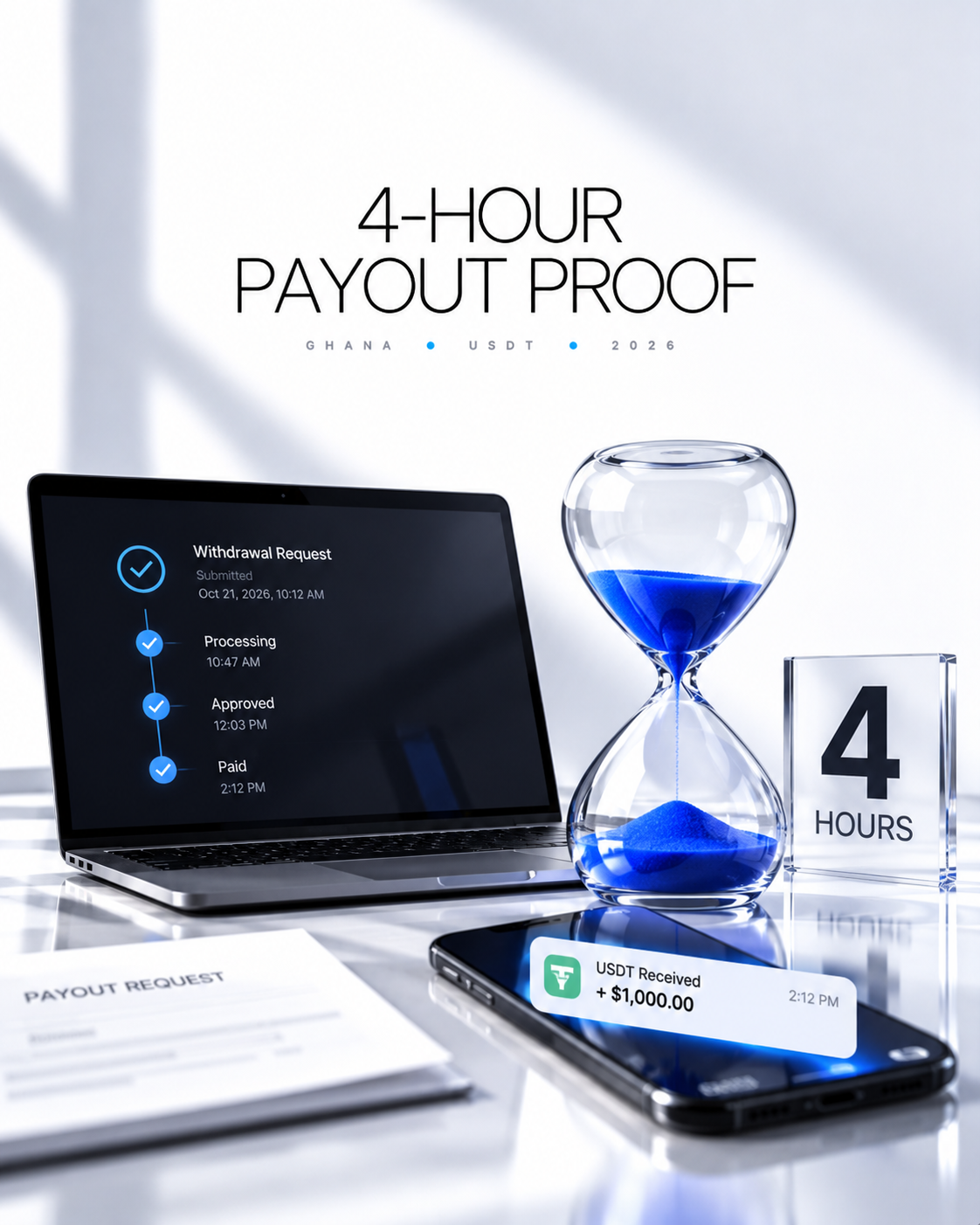
Why Prop Firms Promise Instant Payouts but PropScholar Publishes 4-Hour Proof Instead (Ghana USDT 2026)
10 min read
Trading Comparison
Funded Account Rejected Twice: Why PropScholar Accepts Traders Retail Brokers Ban
13 min read