
Funded Account Rejected Twice: Why PropScholar Accepts Traders Retail Brokers Ban
Got rejected by retail brokers or foreign prop firms twice already? You're not banned from trading — you're being filtered by a system that wasn't built for you. Here's why PropScholar's evaluation model judges your skill, not your address or banking history, and how Pakistani traders pay with USDT today.
Got rejected by retail brokers or foreign prop firms twice already? You're not banned from trading — you're being filtered by a system that wasn't built for you. Here's why PropScholar's evaluation model judges your skill, not your address or banking history, and how Pakistani traders pay with USDT today.
Start your evaluationFunded Account Rejected Twice: Why PropScholar Accepts Traders Retail Brokers Ban
TL;DR: Two rejections from retail brokers or overseas prop firms don't mean you can't trade — they mean you've been filtered by systems built around geography and banking, not skill. PropScholar's scholarship evaluation judges your trading, not your address. Pakistani traders pay $10 in USDT, pass one 10% target, and receive a scholarship payment within 4 hours of verification.
Key takeaways:
- Retail broker bans are usually about KYC, payment rails, or regional risk — not your trading ability.
- PropScholar is a scholarship-based evaluation platform, not a prop firm. It assesses skill, not citizenship or employment history.
- Entry costs $10 for the $10,000 Freedom Account; payment is in USDT, bought on any P2P exchange.
- The evaluation is one step: hit 10%, stay within a 6% max loss and 3% daily loss, and that's it.
- Scholarships are processed within 4 hours of request, with every payment publicly verifiable.
You've already been turned down twice. Maybe a retail broker flagged your account for region-based compliance. Maybe an overseas prop firm blocked your payment because your bank doesn't process international transfers cleanly. Or maybe you passed the evaluation and then couldn't receive the payout because your country wasn't on their approved list.
None of that is a verdict on your trading. It's a verdict on geography.
That distinction matters — because there's a real path forward, and it doesn't require you to move countries or find a foreign bank account.
Why Retail Brokers Actually Reject Pakistani Traders
The honest answer is that most retail broker rejections have almost nothing to do with how you trade. There are a few patterns that come up constantly.
Regulatory licensing is the first one. Brokers licensed under specific jurisdictions — FCA, ASIC, CySEC — carry compliance obligations that sometimes restrict which countries they onboard. Pakistan isn't always on the approved list, and even when it is, the KYC process can be so manual and intrusive that accounts just never fully activate.
Payment rails are the second one. A broker might technically accept Pakistani users, but if your bank transfer fails at the gateway or your card gets flagged for international processing, your account sits unfunded indefinitely. It doesn't matter that you were ready to trade.
The third pattern is the subtlest: some prop firms abroad reject applications not because of any rule violation, but because high-volume account creation from certain regions has trained their fraud filters to flag those regions broadly. Your application is legitimate. Their algorithm doesn't know that.
None of these filters care whether you can identify a clean breakout setup or manage drawdown properly. They're screening for banking compliance and regional liability, not trading competence. If you've been rejected twice, there's a very real chance your actual trading skill was never evaluated at all.
What PropScholar's Model Does Differently
PropScholar is a scholarship-based trading evaluation platform — not a prop firm, not a brokerage. That distinction is load-bearing here.
Retail brokers and prop firms have to worry about regulatory exposure, capital allocation, and counterparty risk in every country they operate. PropScholar's model is different: you pay a small entry fee, you trade through the evaluation, and if you hit the target within the rules, you receive a scholarship payment. The platform doesn't manage institutional capital or allocate real money in your name. What it evaluates is your trading discipline, which means the filtering criteria are completely different.
There is no bank transfer to fail. There is no regional compliance exclusion list. There is no waiting for a compliance officer in London to approve your account. You buy USDT — the most widely traded stable coin in the world — on a P2P exchange using whatever local payment method you have, send it to PropScholar via NOWPayments, and you're in.
The actual evaluation criteria are transparent and posted publicly at propscholar.com/terms-of-use:
The 10% profit target. On a $10,000 Freedom Account, that means growing the account to $11,000. No minimum days. No minimum profitable days. No time limit. The fastest recorded pass across the platform is 2 hours.
The 6% maximum loss. Your account can draw down by no more than $600 from the starting balance of $10,000. That's the absolute floor — breach it and the evaluation ends.
The 3% daily loss. Each day, your loss cannot exceed 3% of the higher of your starting equity or your current balance. So if your balance has grown to $10,400, your daily loss limit that day is $312, not $300. The rule scales with your success.
Those are the real constraints. There are also lot limits you need to know about — on the $10,000 account specifically: 4.00 lots maximum open on forex, 0.40 on gold, 1.00 on silver, 0.20 on BTCUSD, 1.00 on ETHUSD, 0.50 on NAS100, 0.30 on US30, and 0.75 on US500. These are concurrent open lots, not cumulative traded lots. Each asset class is independent — you can't borrow headroom from one to apply to another.
This is the one real structural restriction on the Freedom Account. We publish it upfront because any platform that hides lot limits is setting you up to fail later. If you want to understand why this transparency matters, the full breakdown is here.
How Pakistani Traders Actually Pay: The Real USDT Path
Let's be specific, because this is the part that confuses most people who've only ever paid for things with a local bank transfer.
USDT (Tether) is a stable coin pegged to the US dollar. One USDT equals one dollar. It's the most liquid stable coin in the world, and it's traded on P2P platforms across Pakistan constantly — meaning there are sellers in your city ready to accept your local payment and send you USDT in minutes.
Here's the actual sequence:
First, create an account on a P2P crypto exchange that operates in Pakistan. Binance P2P is the most widely used. Your account needs to be verified — this takes a day or two the first time but is a one-time process.
Second, browse P2P listings for USDT sellers who accept your preferred local payment method. You'll find options. Confirm the trade, pay the seller through whatever channel they list, and receive USDT in your exchange wallet.
Third, go to PropScholar's shop, select the Freedom Account size you want, and pay via NOWPayments. The checkout generates a wallet address. You send USDT from your exchange wallet to that address. The transaction confirms on-chain within minutes.
Fourth, your PropScholar account is activated and you start the evaluation.
The entry fee for the $10,000 Freedom Account is $10. Ten dollars. If the account is too large for your current skill level, the $5,000 account entry is $5. If you want maximum room to work, the $25,000 account is $25. One account per trader — that limit is enforced server-side.
What Happens After You Pass
The scholarship amounts are specific: $20 on the $5,000 account, $42 on the $10,000 account, $100 on the $25,000 account. These are paid within 4 hours of you requesting a payout after your evaluation is verified. Every single payment is publicly listed at propscholar.com/payout-proof — not a testimonials page, an actual transaction log.
This matters after two rejections, because your concern at this point is probably not just "can I pass" — it's "if I pass, will I actually get paid." The answer to that question should be verifiable before you spend $10, which is why the payout proof page exists.
If you've read the related article on whether the 10% target is actually achievable with real math, you'll already know the comparison with the 20% two-step targets that most prop firms run. The short version: the math genuinely is more forgiving here, and the structure with no time limit removes the artificial pressure that causes most evaluation failures.
The Rules That Actually Protect You (Not Just Restrict You)
When you've been burned by a platform twice, you read every rule with suspicion. That's the right instinct. So let's name the ones that cut in your favour.
No minimum trading days. You don't have to pad your calendar. If you hit 10% in day two and your drawdown is clean, you pass. The platform doesn't make you wait.
No time limit. You can take the evaluation at whatever pace your schedule allows. Night shifts, part-time work, Ramadan hours — none of it creates a deadline problem.
Weekend holding allowed. You can carry positions over Friday close. Many platforms ban this because it creates gap risk they don't want to manage. PropScholar allows it, which gives swing traders a meaningful structural advantage.
News trading restriction. This one cuts the other direction — news trading is not allowed on the Freedom Account. If your strategy relies on trading the 30 seconds around a major release, you'll need to adjust. This is a real rule, and it's published clearly in the terms.
Inactivity rule. If you don't trade for 14 consecutive days, the account is considered inactive. Log in, place a trade — don't ghost your account for two weeks.
If you've previously blown accounts on retail and you're wondering whether that history carries forward, it doesn't. The evaluation starts fresh. This article on recovery after a blown retail account covers that psychology specifically — the short answer is that the structure of a 6% max loss is actually easier to stay within than the way most retail accounts collapse, which is no limit at all.
PropScholar vs the Systems That Rejected You
What retail brokers screen for
Retail brokers screen for KYC document quality, country of residence against their regulatory license, banking method compatibility, and minimum deposit size. None of these criteria tell them anything about whether you can trade.What PropScholar screens for
PropScholar screens for whether you can grow a simulated account by 10% while keeping daily loss below 3% and total drawdown below 6%. That's it. No address check. No employment letter. No credit history. No minimum deposit beyond the $10 entry fee.The payment difference
Retail brokers want a bank transfer or card payment that processes cleanly through their payment gateway — which fails for a large percentage of Pakistani traders at the infrastructure level. PropScholar accepts USDT via NOWPayments. If you can buy USDT on a P2P exchange (you can), you can pay.The payout difference
Retail brokers return your own money when you withdraw — and some hold it for weeks. PropScholar pays a scholarship on your pass, processed within 4 hours, to a USDT wallet you control. There is no correspondent bank between you and the payment.One Thing Worth Being Honest About
The scholarship amounts on the Freedom Account — $42 on a $10,000 evaluation — are not life-changing numbers on their own. What they are is proof of concept. A verified pass on a skill-based evaluation, with a public payout record attached to it, is the kind of track record that opens doors to progressively larger evaluations and builds the discipline that scales.
If you've been rejected twice by systems that never actually tested your trading, this is the place to prove what you can do. The $10 entry is low enough that the cost of a failed attempt is a meal, not a month's rent. The rules are published in full. The payouts are public. And unlike both things that rejected you before, the filter here is your skill — which is the only filter that ever made sense.
Frequently Asked Questions
Can I join PropScholar after being rejected by a retail broker or prop firm? Yes. PropScholar's evaluation model doesn't screen for broker history, country bans, or previous rejections elsewhere. If you can complete the USDT payment and meet the trading rules — 10% profit target, 6% max loss, 3% daily loss — you're eligible. Previous rejections from other platforms have no bearing on your PropScholar evaluation.
How do Pakistani traders pay for PropScholar? Buy USDT on a P2P exchange like Binance P2P using your local payment method. Then send USDT to PropScholar via NOWPayments at checkout. The $10,000 Freedom Account entry costs $10. No international bank transfer is needed, no card required — just USDT in a wallet you control.
Is PropScholar a prop firm? No. PropScholar is a scholarship-based trading evaluation platform, registered as a Private Limited company in India. It doesn't manage or allocate institutional capital. You pay an entry fee, complete an evaluation, and if you pass, receive a scholarship payment — not a share of trading profits from a live fund.
How fast are payouts processed? Within 4 hours of a verified payout request. Every payment is publicly listed at propscholar.com/payout-proof. This isn't a stated policy — it's a verifiable record you can check before you spend a single dollar on the entry fee.
What's the real risk of the $10,000 Freedom Account evaluation? Your maximum financial exposure is the $10 entry fee. The evaluation itself has a 6% max loss limit ($600 on a $10,000 account) and a 3% daily loss cap. These limits stop an evaluation from spiralling — a discipline we've seen prevent the kind of catastrophic single-session drawdowns that end retail accounts permanently. You can only lose the entry fee you paid.
Are there any hidden rules I should know about? The most important non-obvious rule is the lot limit per asset class. On the $10,000 account: 4.00 forex, 0.40 gold, 1.00 silver, 0.20 BTCUSD, 1.00 ETHUSD, 0.50 NAS100, 0.30 US30, 0.75 US500. These are concurrent open lots — not cumulative. News trading is also not allowed on the Freedom Account. The full ruleset is at propscholar.com/terms-of-use.
Can I hold one PropScholar account and buy another? No. There is a one Freedom Account per trader limit, enforced server-side. If you want to upgrade to a different account size, you work within the available sizes ($5,000, $10,000, $25,000) sequentially — you can't run two Freedom Accounts simultaneously.
PropScholar is a scholarship-based trading evaluation platform operated by a Private Limited company registered in India. We are not a prop firm and do not manage or allocate institutional capital. Our model rewards proven trading skill with scholarship grants upon successful evaluation completion.
Related reading
- Best $1 Trading Challenge 2026: Why 1K 1-Step Wins
- Best Prop Firm in India 2026 (UPI-Friendly): Honest Comparison
- Cheapest Legit Way to Access a Funded-Style Trading Account From $5
- Prop Firm Challenge Under $5: Cheapest Legit Funded Accounts Compared
- Buy FTMO & Funding Pips Challenges at INR Pricing: Full Guide
- Pay-After-Pass Prop Firms: What the Alternative Actually Is
Ready to Prove Your Edge?
Join 500+ traders. Start from just $5. Get funded within days.
Frequently Asked Questions
Yes. PropScholar's evaluation model doesn't screen for broker history, country bans, or previous rejections elsewhere. If you can complete the USDT payment and meet the trading rules — 10% profit target, 6% max loss, 3% daily loss — you're eligible. Previous rejections from other platforms have no bearing on your PropScholar evaluation whatsoever.
More From PropScholar

Trader Safety
Bounced From Three Retail Brokers: Why a Scholarship Evaluation Trusts Your Next Attempt (Pakistan USDT 2026)
15 min read

Beginner Trading
Teacher in Kenya on 40K Salary: Trade USDT Funded Accounts in Lunch Breaks (2026)
12 min read

Trading Psychology
Revenge Trading After a Loss: Why PropScholar's 3% Daily Limit Stops the Tilt Cycle (Pakistan USDT 2026)
12 min read
Trading Comparison
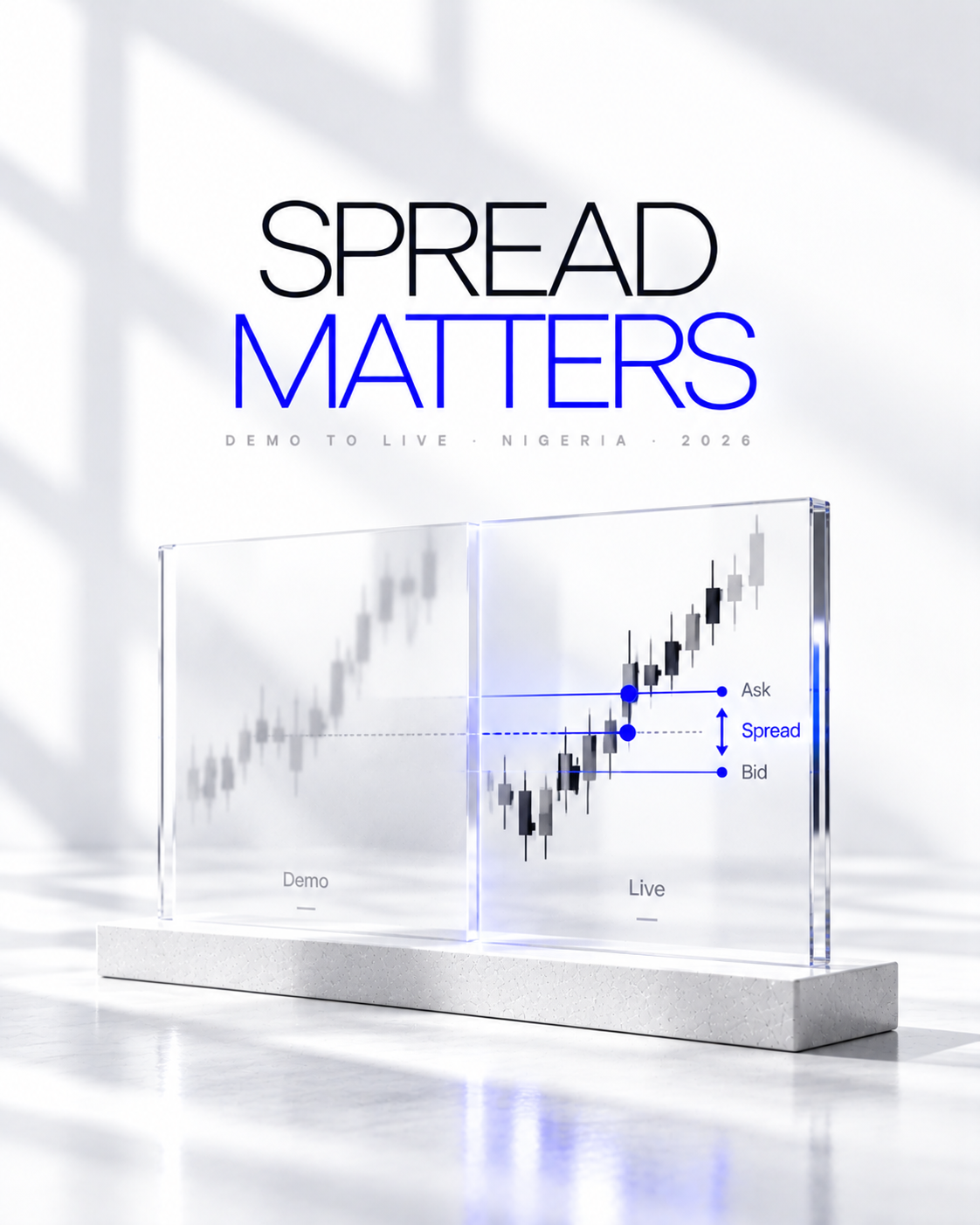
Why Spread Quality Decides if Demo Skills Transfer to Real Money—Nigeria USDT Guide (2026)
10 min read
Trading Comparison
Free Scholarship vs Paid Challenge: The Real Cost of 'Risk-Free' Evaluations When Retry Fees Are Hidden
13 min read

Scholarship Model
Is There a Scholarship for Traders Who Failed Retail? Evaluation Accounts vs Demo (India UPI 2026)
13 min read