
Student With No Job in Nigeria: Can You Trade USDT Without Proof of Income (2026)?
If you're a Nigerian student with no job and no payslip, you can still start a funded trading evaluation in 2026. PropScholar asks for no proof of income, no bank statement, and no employment history. All you need is USDT and a strategy that holds up to real rules. Here's exactly how the whole thing works, step by step.
If you're a Nigerian student with no job and no payslip, you can still start a funded trading evaluation in 2026. PropScholar asks for no proof of income, no bank statement, and no employment history. All you need is USDT and a strategy that holds up to real rules. Here's exactly how the whole thing works, step by step.
Start your evaluationStudent With No Job in Nigeria: Can You Trade USDT Without Proof of Income (2026)?
TL;DR: Yes. PropScholar, a scholarship-based trading evaluation platform, requires zero proof of income, no payslip, and no employment history. You pay $5 in USDT, pass a one-step evaluation, and claim your scholarship — paid within 4 hours. That's the whole model.
Key takeaways:
- PropScholar never asks for a job, payslip, bank statement, or proof of income
- Entry starts at $5 — paid in USDT, which you buy on a P2P exchange using naira
- One step, 10% profit target, no time limit, no minimum trading days
- Scholarship on the $5,000 account: $20, paid within 4 hours of verification
- Every payout is publicly listed at propscholar.com/payout-proof
You're a student in Nigeria. You have time, you have internet, and you've been learning how to trade. What you don't have is a job, a payslip, or a bank statement that makes you look "financially credible" to some foreign prop firm that wants you to wire $200 before they'll even look at your application.
That specific frustration — being good enough to trade but locked out because of paperwork — is exactly what this article addresses. Because the honest answer is that most evaluation platforms don't actually need your employment history. They need to know you can trade. PropScholar takes that logic all the way: no income check, no job requirement, no KYC that asks where your salary comes from. Just a small USDT payment and a strategy that follows the rules.
Let's go through the whole thing properly.
Does a Nigerian Trading Evaluation Platform Actually Check Your Employment Status?
PropScholar does not. No employment check, no income verification, no request for bank statements. The only thing that matters is whether your trading meets the evaluation criteria.
This isn't a loophole — it's the design. PropScholar is a scholarship-based evaluation platform, not a financial institution extending credit. You're not borrowing money or applying for a loan. You're paying a small fee to have your trading assessed. Whether you earn ₦0 or ₦500,000 a month is irrelevant to whether you can hit a 10% profit target without breaching a drawdown limit.
The platforms that ask for income proof are mostly doing one of two things: they're running a highly regulated financial product that legally requires KYC income checks, or they're using the barrier to weed out low-budget applicants. PropScholar does neither. The entry fee itself is the qualifier — $5 in USDT for the smallest account. That's it.
How the PropScholar Freedom Challenge Actually Works
The product is called the Freedom Challenge, and the account you're evaluating on is called a Freedom Account. Here's the structure:
You choose an account size: $5,000, $10,000, $15,000, $25,000, or $50,000. The entry fee is literally one dollar per thousand — $5 for the 5K, $10 for the 10K, up to $50 for the 50K. For most Nigerian students starting out, the $5 entry on the 5K account makes the most sense. The scholarship on passing is $20.
The evaluation is one step. You need to grow the account by 10% — so $500 on the $5,000 account. There is no time limit, no minimum trading days, and no minimum profitable days requirement. You trade at whatever pace fits your schedule.
The limits you need to respect:
Maximum loss is 6% of the initial account size. On a $5,000 account that's $300. Blow past that total and the evaluation ends.
Daily loss is 3% of whichever is higher — your starting equity or your current balance. Early in the evaluation when your balance is at or near starting, that's $150 on the $5,000 account. This resets each day. It's the rule most beginners trip on, so track it.
Leverage is 1:50. High enough to work with smaller position sizes, not so high that one bad trade wipes the account.
News trading is restricted. You cannot open or close positions from 10 minutes before to 10 minutes after a scheduled high-impact news event. That includes stop-loss and take-profit closes. This one matters — breaching it ends the account. Check an economic calendar before every session.
Inactivity rule: if you go 14 consecutive days without placing a trade, the account is flagged. If you're a student who travels home for a semester break, plan for that.
Weekend holding is allowed. That's genuinely useful — you can hold positions over Friday close without getting forced out.
The Lot Limits: Read This Before You Size a Single Trade
The lot limits are the one real constraint on the Freedom Account, and I'd rather you know them now than find out mid-trade. These are maximum open lots per asset class at any one time — concurrent, not cumulative.
On the $10,000 account as a reference point: 4.00 lots forex, 0.40 gold, 1.00 silver, 0.20 BTCUSD, 1.00 ETHUSD, 2.00 other crypto, 0.50 NAS100, 0.30 US30, 0.75 US500, 0.50 other indices.
The gold limit — 0.40 lots on the $10,000 — is the one that catches people who learned to trade gold with large positions. On the $5,000 account, the limits scale down proportionally. Each asset class is independent; you can't borrow headroom from forex to put into gold. That's the rule, full stop.
If your strategy is built around gold, size accordingly. 0.40 lots on a $10,000 account is still workable if your entries are precise. It just means you can't blast in with large lots and hope the move carries you. Which, honestly, is the right constraint — it pushes you toward deliberate, structured trading.
How to Actually Pay as a Nigerian Student: USDT Step by Step
This is the part most articles skip over, and it's the part that actually matters if you're in Nigeria.
PropScholar accepts USDT and other crypto via NOWPayments for traders outside India. For Nigerians, that means you need USDT in a wallet before you can pay.
Here's the real path:
Step 1: Get a crypto exchange account. Binance and Bybit both have active P2P markets in Nigeria. Set up an account with either one. Verification is typically an ID document — your student ID may work, or a national ID. This is exchange-level KYC, nothing to do with PropScholar.
Step 2: Buy USDT with naira on P2P. On the P2P market, you'll see local sellers listing USDT for naira. You pick a seller, transfer naira to their bank account (or via whatever method they list), and once they confirm, the USDT lands in your exchange wallet. The rate varies by seller and by day, so check a few listings. At the time of writing, buying $5 worth of USDT means you're sending something in the range of ₦4,000–₦5,000 depending on the P2P rate — but that number moves, so check the live market.
Step 3: Withdraw USDT to your wallet. You can either pay directly from your exchange wallet if the exchange supports it, or withdraw to a personal wallet like Trust Wallet or MetaMask first. Check the network — USDT runs on TRC-20 (Tron), ERC-20 (Ethereum), and others. TRC-20 usually has lower fees. Use the matching network at both ends or the funds don't arrive.
Step 4: Pay at checkout on PropScholar. When you buy an account at propscholar.com/shop, the NOWPayments checkout gives you a wallet address and network. Send the exact USDT amount. Once confirmed on-chain, the account activates.
That's the whole process. It sounds like more steps than it is — most traders who've done it once say the second time takes about five minutes.
What Happens When You Pass?
Once you hit the 10% profit target without breaching the drawdown or any of the trading rules, you submit for verification. The scholarship is processed within 4 hours of that request.
On the $5,000 account: $20 scholarship. On the $10,000: $42. $15,000: $60. $25,000: $100. $50,000: $200.
The payout goes back via USDT for non-Indian traders. So you receive USDT, which you can then sell back to naira on the same P2P market you used to buy it.
Every payout PropScholar has processed is publicly listed at propscholar.com/payout-proof. Go look at it before you pay anything. If a platform can't show you a live, verifiable list of recent payouts, that's your answer about whether they actually pay.
One more thing worth knowing: there's no limit on how many Freedom accounts you can buy. If you want to run a $5,000 and a $10,000 evaluation simultaneously, that's allowed. The only restriction is that you can't copy trades between two PropScholar accounts.
Why This Model Actually Suits Nigerian Students
The standard prop firm model has two problems for Nigerian students. First, entry fees: most credible prop firms charge $100–$400 for their smallest account. That's a lot to risk on a first evaluation. Second, payment: most don't have clean naira-to-dollar payment paths, and the ones that do often want a bank card or a Payoneer account that takes weeks to approve.
PropScholar costs $5 and takes USDT. The P2P process to get USDT from naira is something millions of Nigerians already know how to do — many use it regularly for other reasons. So the payment path isn't some exotic workaround; it's a standard part of how naira-holders interact with crypto markets.
The scholarship amount on the $5,000 account ($20) is four times the entry fee. That's a 400% return if you pass. And because there's no time limit, you're not being rushed into bad trades by a countdown clock.
The fastest recorded pass on a PropScholar evaluation is 2 hours. That's not a promise about your result — it's just evidence the structure doesn't artificially drag things out.
Common Concerns Before You Start
"What if I fail the evaluation?"
You lose the entry fee — $5. That's the downside. There's no ongoing subscription, no hidden reset fee that appears after you fail, no "activation fee" that emerges once you've passed. The entry fee is the only financial exposure.
"Do I need a trading history to apply?"
No. PropScholar evaluates your trading on the evaluation account itself, not your past performance. There's no resume, no track record submission, no prior account required.
"Can I use a signal or copy someone else's trades?"
You can use external signals as a guide, but you cannot copy trades from another PropScholar account. Using a third-party signal to inform your own decisions is different from automated copying between platform accounts.
"What if I have a question during the evaluation?"
PropScholar runs 24/7 support in multiple languages. The Discord community at discord.gg/uTU85z4hft has 3,000+ traders, many of them in West Africa. For direct support, you can reach the team at business@propscholar.com.
The Honest Summary
If you're a Nigerian student with no job, no payslip, and a small amount of naira you can convert to USDT, you can start a legitimate funded trading evaluation today. PropScholar doesn't care about your employment status. It cares about whether your trading respects a 10% profit target, a 6% max drawdown, a 3% daily loss, and the news trading restriction.
Those rules are public, they haven't changed retroactively, and every payout is verifiable. That combination — transparent rules, low entry, verifiable payouts, no income check — is genuinely rare in this space.
The $5 entry means the worst-case financial outcome is a $5 loss. The best-case is a $20 scholarship paid in USDT within 4 hours. For a student who has the time to trade and the discipline to follow rules, that's a reasonable bet.
PropScholar is a scholarship-based trading evaluation platform operated by a Private Limited company registered in India. We are not a prop firm and do not manage or allocate institutional capital. Our model rewards proven trading skill with scholarship grants upon successful evaluation completion.
Related reading
- Scholaris AI: The Trading Assistant That Reviews Your Trades and Answers Instantly
- Trading Platforms With Hindi Support for Indian Beginners
- Freelancer in Pakistan With Irregular Income: How to Prove Consistency on a Funded Evaluation Without a W2 Job (USDT 2026)
- How 24/7 Multi-Language Support Helps New Traders Avoid Costly Mistakes
- No Job, No Problem: Can a Gig Worker in Kenya Pass a Funded Trading Evaluation? (USDT Method 2026)
- Can a Gig Worker in South Africa Pass a Funded Evaluation on Irregular Income? USDT Challenge Explained (2026)
Ready to Prove Your Edge?
Join 500+ traders. Start from just $5. Get funded within days.
Frequently Asked Questions
Yes. PropScholar requires no proof of income, no payslip, and no employment history. You pay $5 in USDT, pass a one-step evaluation with a 10% profit target, and claim a $20 scholarship — paid within 4 hours of verification. Your employment status is completely irrelevant to the application.
More From PropScholar

Trader Support
9-to-5 Job in Nigeria: Can You Trade a USDT Funded Account Without Quitting?
13 min read

Scholarship Model
Female Day Trader in Vietnam: Cheapest USDT Funded Account Without a Resume (2026)
11 min read
Trader Support
Do You Need a Job to Start Prop Trading in Egypt? USDT Challenge Without Employment Proof (2026)
11 min read
Risk Management
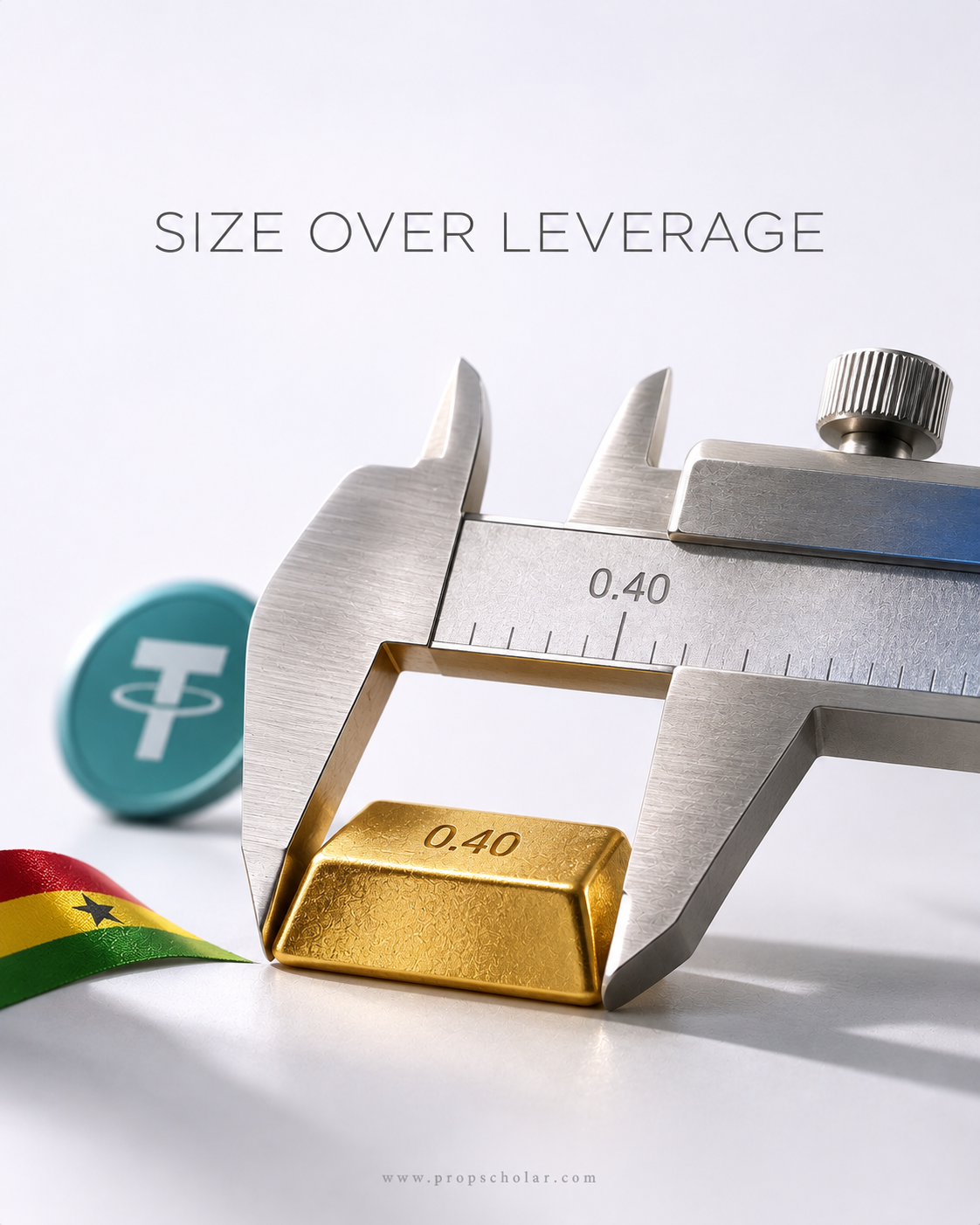
Leverage 1:50 + 0.40 Gold Lot Limit: Real Math for Ghana USDT Traders
12 min read
Trader Safety
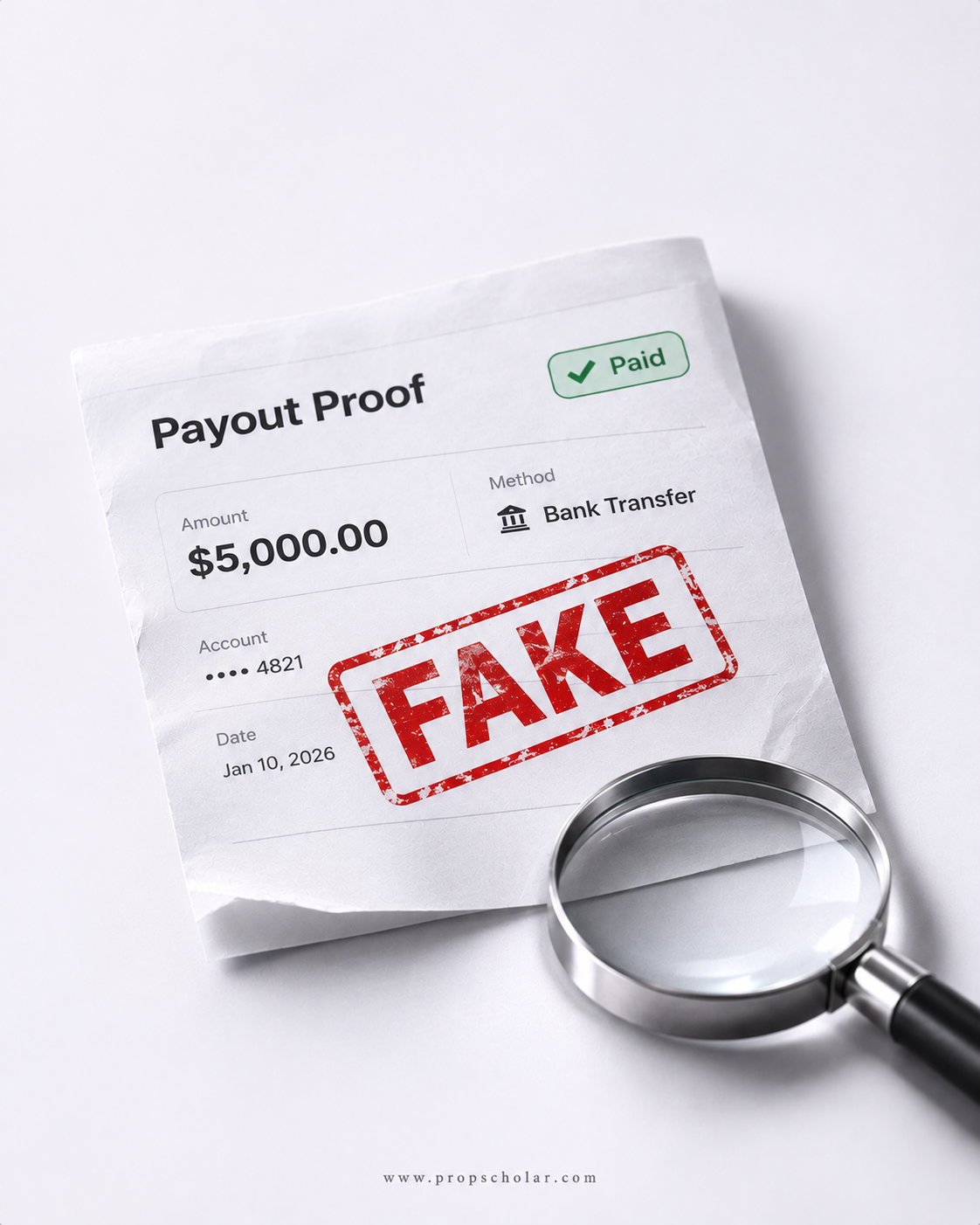
Fake Payout Proof: How to Check If a Prop Firm Really Pays in 2026
14 min read
Risk Management
14-Day Inactivity Rule Explained: What Counts as a Trade and When Your Account Gets Locked
14 min read