
PropScholar's 14-Day Inactivity Rule: Trade When Ready, Not on a Forced Schedule
Most trading evaluations pressure you into trading every single day or risk losing your account. PropScholar's 14-day inactivity rule is different: you have a two-week window between trades, no minimum trading days, and zero daily session requirements. For South African traders paying via USDT, this changes everything about how you approach an evaluation. Here's exactly how the rule works, why it

Most trading evaluations pressure you into trading every single day or risk losing your account. PropScholar's 14-day inactivity rule is different: you have a two-week window between trades, no minimum trading days, and zero daily session requirements. For South African traders paying via USDT, this changes everything about how you approach an evaluation. Here's exactly how the rule works, why it
Start your evaluationPropScholar's 14-Day Inactivity Rule: Trade When Ready, Not on a Forced Schedule
TL;DR: PropScholar's Freedom Account has no minimum trading days, no daily session requirement, and a 14-day inactivity window between trades. For South African traders buying in via USDT, this means you can run a genuinely patient, disciplined evaluation without an artificial clock forcing bad decisions.
Key takeaways:
- The 14-day inactivity rule means your account only closes if you go 14 consecutive days without a single trade — not 14 hours, not 3 days, 14 days.
- There are no minimum trading days and no daily session minimums on the Freedom Account.
- South African traders pay via USDT, most easily bought on a P2P exchange using a local bank transfer, then sent to PropScholar via NOWPayments.
- The $10,000 Freedom Account costs just $10 to enter and carries a $42 scholarship on a pass.
- Lot limits are real and public: 4.00 lots forex, 0.40 lots gold, 0.20 lots BTCUSD on the $10,000 account — know them before you trade.
- Every payout is publicly verifiable at propscholar.com/payout-proof.
You're a working adult in Cape Town, Durban, or Johannesburg. Maybe you work shifts. Maybe you freelance and your income weeks look nothing like a Monday-to-Friday calendar. You've looked at trading evaluations before and one thing keeps killing the idea: the pressure to trade every single day whether conditions are good or not.
Some platforms explicitly require five, eight, or ten minimum trading days. Others don't state a minimum, but their inactivity clause is so tight — 48 or 72 hours — that you're effectively forced to trade on command just to keep the account alive. That's not discipline. That's anxiety in disguise.
PropScholar built the Freedom Account differently, and the 14-day inactivity rule is the most direct expression of that philosophy.
What the 14-Day Inactivity Rule Actually Means
The rule is simple: if you go 14 consecutive calendar days without placing a single trade, your account closes. That's it. One trade every 14 days is enough to keep the account active.
This isn't a loophole or a grey area — it's the stated rule at propscholar.com/terms-of-use. There is no minimum number of trading days you must accumulate. There is no requirement to trade every week or even every other week. If you pass the evaluation in a single session — and the fastest recorded pass on the Freedom Account is 2 hours — you're done. If you take three weeks with careful, selective entries, that's also fine.
What it does rule out is abandoning the account entirely. If you buy an evaluation and simply never open the platform again, you'll lose access after 14 days. That's a reasonable expectation: PropScholar is for traders who actually want to trade, not for people parking an account indefinitely.
For everyone else — the shift worker, the student with exam weeks, the parent whose schedule shifts around school holidays — 14 days is genuinely generous breathing room.
Why Forced Daily Trading Is Bad for Your Actual Results
There's a real argument for why daily trading requirements exist. Platforms use them as a proxy for "proving consistency." The logic sounds reasonable until you examine it closely.
Consistency in trading isn't about frequency. It's about executing your edge when conditions match your system, and staying flat when they don't. Forcing a trader to enter a position on a Tuesday because Tuesday is trading day number four doesn't test skill — it tests compliance. And it creates something worse: traders who know they don't have a strong setup but enter anyway because the clock is running.
That's where most evaluation failures actually come from. Not from one catastrophic blow-up, but from a slow accumulation of marginal trades taken out of schedule pressure. Positions that a relaxed, patient trader would skip become positions that a pressured, clock-watching trader takes. The 3% daily loss limit on the Freedom Account protects against the catastrophic version of this, but the damage done by a series of unnecessary -0.5% trades is subtler and just as real.
The 14-day rule removes the gun from the table. You decide when the setup is ready.
How South African Traders Pay: The Real USDT Path
PropScholar doesn't accept local South African payment methods directly. What it accepts is USDT and other supported crypto via NOWPayments, and PayPal. For most South African traders, USDT is the practical path — and it's more straightforward than it first sounds.
Here's how it actually works:
Step 1: Get rands into a P2P exchange. Platforms like Binance P2P operate in South Africa. You create an account, complete identity verification, and fund your wallet via a local bank transfer to a verified peer seller. You're buying USDT from another person using ZAR.
Step 2: Receive USDT in your exchange wallet. Once the transfer clears and the seller confirms, USDT lands in your exchange wallet. The rate varies with the market but you'll see the exact ZAR cost before you confirm.
Step 3: Send USDT to PropScholar at checkout. When you select your Freedom Account on propscholar.com/shop, you choose the crypto payment option. NOWPayments generates a wallet address and you send the USDT from your exchange wallet directly to that address. The $10,000 account costs $10. The $5,000 account costs $5. The $25,000 account has its own entry price listed at checkout.
Step 4: Receive your login credentials and start trading. Once the transaction confirms on-chain, you're in.
The whole process from "I want to do this" to "I have an active account" can happen in under an hour, depending on how quickly your P2P transfer settles. Nothing about this requires a credit card, a foreign bank account, or a payment method that PropScholar doesn't actually offer.
The Actual Rules on the Freedom Account — No Surprises
The 14-day inactivity rule gets attention, but it lives alongside a set of other rules you need to know before you trade. PropScholar publishes all of these upfront, which is discussed in detail in this post on why PropScholar publishes lot limits before you pay. Here's the full picture for the Freedom Account:
The profit target is 10% of the starting account balance. On a $10,000 account, that means reaching $11,000 in balance.
The maximum loss is 6% of the initial account size — $600 on a $10,000 account. Hit that and the evaluation ends.
The daily loss limit is 3% of whichever is higher: your starting balance for that day or your current equity. On a $10,000 account that's $300. This resets daily.
Lot limits on the $10,000 account are the one meaningful operational constraint: 4.00 lots forex, 0.40 lots gold, 1.00 lots silver, 0.20 lots BTCUSD, 1.00 lots ETHUSD, 0.50 lots NAS100, 0.30 lots US30, 0.75 lots US500. These are maximum open lots per asset class concurrently. You can't borrow headroom from one class to add to another.
News trading is not allowed on the Freedom Account. If you trade forex around scheduled high-impact news events, you need to account for that in your plan.
Weekend holding is allowed. You can carry positions over Friday close.
Leverage is 1:50. Combined with the lot limits, this defines your actual maximum exposure on any given trade.
One account per trader. The platform enforces this server-side — you can't hold two Freedom Accounts simultaneously.
Knowing these numbers in advance lets you build a proper trade plan. The 14-day window is only useful if you're entering trades that actually fit within these parameters.
Building a Schedule Around the 14-Day Rule — Practically
Let's be concrete about what "trading when ready" looks like in practice for a South African trader.
Say you work irregular shifts at a hospital in Pretoria. Your trading window is genuinely unpredictable. Some weeks you get four clear mornings; other weeks you're on night cover and the best you can do is check charts at 6 AM before sleep. With a 14-day inactivity rule, a bad week doesn't cost you the account. You trade your three good setups during the good week, then go quiet during the rough one. The account stays open.
Or you're a student in Stellenbosch with exam blocks in May and August. You can run a careful evaluation through March and April, go relatively quiet during May exams (as long as you place at least one trade somewhere in any 14-day window), and resume in June. That kind of flexibility is structurally impossible on platforms with daily minimums.
The practical advice: don't use the 14-day rule as a reason to be unfocused. Use it as a reason to be selective. Come to the platform with a system, take the trades that fit it, and skip the ones that don't. The scholarship on a pass — $42 for the $10,000 account, paid within 4 hours of verification — is worth protecting with patience.
What Happens If You Pass — and How PropScholar Pays
When you hit the 10% profit target within the rules, PropScholar processes your scholarship grant. The $10,000 account pays a $42 scholarship on a pass. The $5,000 account pays $20. The $25,000 account pays $100. Payouts are processed within 4 hours of the verification request.
Every payout is listed publicly at propscholar.com/payout-proof. You can check it before you pay your entry fee. That's not a marketing claim — it's a verifiable record of individual completed payouts that anyone can read.
For South African traders, the scholarship is paid in crypto. Same USDT path you used to pay in, reversed. It lands in your wallet and you can convert back to ZAR on the same P2P exchange you used to fund.
If you want to understand how PropScholar compares to a retail broker path for traders who've struggled before, the post on evaluation accounts vs demo for traders who failed retail covers that comparison in depth. And if budget is the real barrier, the breakdown of why a $5 evaluation beats demo forever explains the stakes difference that makes a paid evaluation genuinely more useful than free practice.
PropScholar vs Evaluations With Daily Requirements
Platforms That Require Daily or Near-Daily Trading
Some evaluation platforms set a minimum of five to ten trading days before you're eligible for a pass. This sounds like it's testing consistency, but it often forces traders into low-quality entries on days when the market offers nothing that matches their system. It also creates real problems for anyone whose life doesn't run on a strict Monday-to-Friday schedule: the shift worker, the parent, the student, the person in a timezone where the relevant session opens at 2 AM.
PropScholar's One-Side Freedom
PropScholar's approach is that the evaluation tests skill — hitting a 10% target while respecting the loss limits — not attendance. The 14-day inactivity rule is the only scheduling constraint, and it's a generous one. You can trade every day if that's your style, or you can trade twice a week. Neither approach is penalized as long as you stay within the 14-day window and respect the lot limits, daily loss rules, and news trading restriction.
That's a genuine structural difference, not a marketing spin. If your trading system is event-driven or sessional rather than daily, PropScholar's model is more compatible with how you actually trade.
FAQs
What exactly triggers the 14-day inactivity rule on PropScholar? If you place no trades for 14 consecutive calendar days, your Freedom Account closes. One trade at any point within that window resets the counter. There is no minimum number of trades required per week or per month — just at least one trade every 14 days to keep the account active.
Does PropScholar require a minimum number of trading days to pass? No. The Freedom Account has no minimum trading days requirement and no minimum profitable days requirement. If you hit the 10% profit target while staying within the 6% max loss and 3% daily loss rules, you pass — regardless of how many trading sessions it took.
How do South African traders pay for a PropScholar evaluation? PropScholar accepts USDT and other crypto via NOWPayments. South African traders typically buy USDT using ZAR on a P2P exchange like Binance P2P, funded by a local bank transfer to a peer seller, then send USDT directly to PropScholar at checkout. The $10,000 Freedom Account costs $10.
What are the lot limits on the $10,000 Freedom Account? Maximum open lots concurrently: 4.00 forex, 0.40 gold, 1.00 silver, 0.20 BTCUSD, 1.00 ETHUSD, 0.50 NAS100, 0.30 US30, 0.75 US500. Each asset class is independent — you can't transfer unused headroom from one to another. These limits are published at propscholar.com/terms-of-use before you pay.
How quickly does PropScholar pay out when you pass? Scholarship grants are processed within 4 hours of a verified pass request. The $10,000 account pays a $42 scholarship. Every completed payout is listed publicly at propscholar.com/payout-proof so you can verify real outcomes before buying your evaluation.
Can I hold positions over the weekend on the Freedom Account? Yes. Weekend holding is permitted on the Freedom Account. News trading is not permitted, so if your strategy involves trading around scheduled high-impact economic releases, you'll need to plan around those specifically.
Is PropScholar available to traders outside India? Yes. PropScholar is a globally available scholarship-based evaluation platform. Traders in South Africa, Nigeria, the Philippines, Indonesia, Pakistan, Kenya, Egypt, Vietnam, Bangladesh, and elsewhere all access it the same way: entry via USDT or PayPal, with evaluations and payouts in crypto. The platform is not India-only — the UPI payment option is available exclusively for traders with Indian bank accounts.
PropScholar is a scholarship-based trading evaluation platform operated by a Private Limited company registered in India. We are not a prop firm and do not manage or allocate institutional capital. Our model rewards proven trading skill with scholarship grants upon successful evaluation completion.
Related reading
- Free Funded Account Nigeria 2026: Qualify Without Paying Upfront
- How PropScholar Scholarship Payouts of Up to 400% Actually Work
- How to Get Paid Quickly After Passing a Trading Evaluation
- $1 Evaluation vs Free Trial: Which Model Suits Vietnamese Beginners
- How to Get a Direct Payout From a Trading Evaluation in Hours, Not Weeks
- UPI Payout Speed for Indian Traders: What's Actually Fast?
Ready to Prove Your Edge?
Join 500+ traders. Start from just $5. Get funded within days.
Frequently Asked Questions
If you place no trades for 14 consecutive calendar days, your Freedom Account closes. One trade at any point within that window resets the counter. There is no minimum number of trades required per week or per month — just at least one trade every 14 days to keep the account active.
More From PropScholar

Beginner Trading
Teacher in Kenya on 40K Salary: Trade USDT Funded Accounts in Lunch Breaks (2026)
12 min read

Scholarship Model
Medical Student in Bangladesh: How a $5 USDT Funded Account Fits Around Hospital Rotations (2026)
11 min read
Trading Conditions
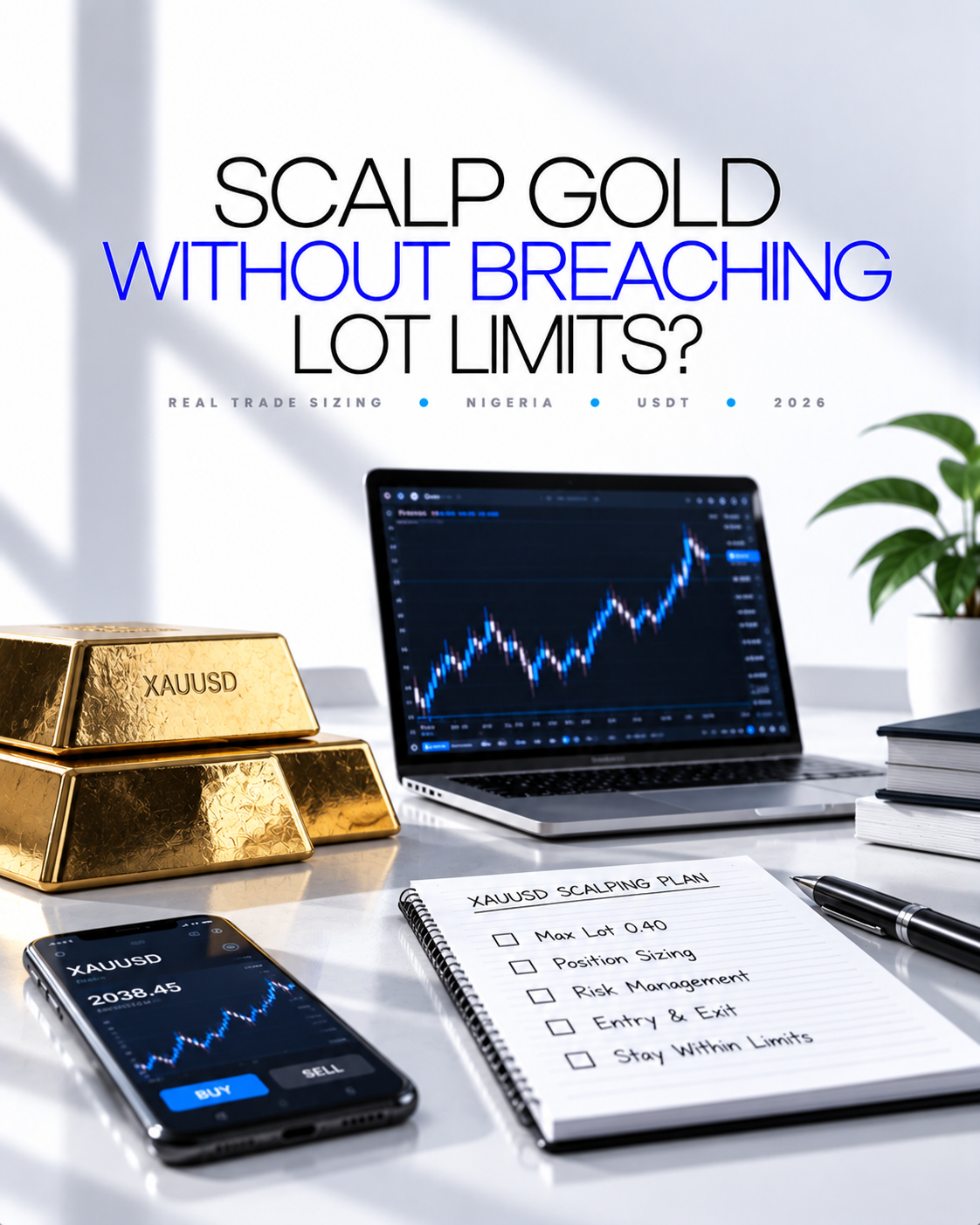
Can You Scalp Gold Without Hitting Lot Limits? Real Trade Sizing for PropScholar's 0.40 Maximum—Nigeria USDT Guide (2026)
11 min read

Trading Comparison
Funded Account Rejected Twice: Why PropScholar Accepts Traders Retail Brokers Ban
13 min read

Scholarship Model
Student in Bangladesh With Zero Savings: How a $5 Funded Account Teaches Position Sizing Better Than 100 Hours of Demo Trading
12 min read
Risk Management
Overthinking Every Trade? How Position Sizing Cures Analysis Paralysis—Bangladesh USDT Guide (2026)
15 min read