
Scholarship Trading Evaluation Hidden Fees: 7 Red Flags
Scholarship-based trading evaluations aren't free, but hidden fees are avoidable. Learn the 7 red flags that expose costly platforms before you pay.
Scholarship-based trading evaluations aren't free, but hidden fees are avoidable. Learn the 7 red flags that expose costly platforms before you pay.
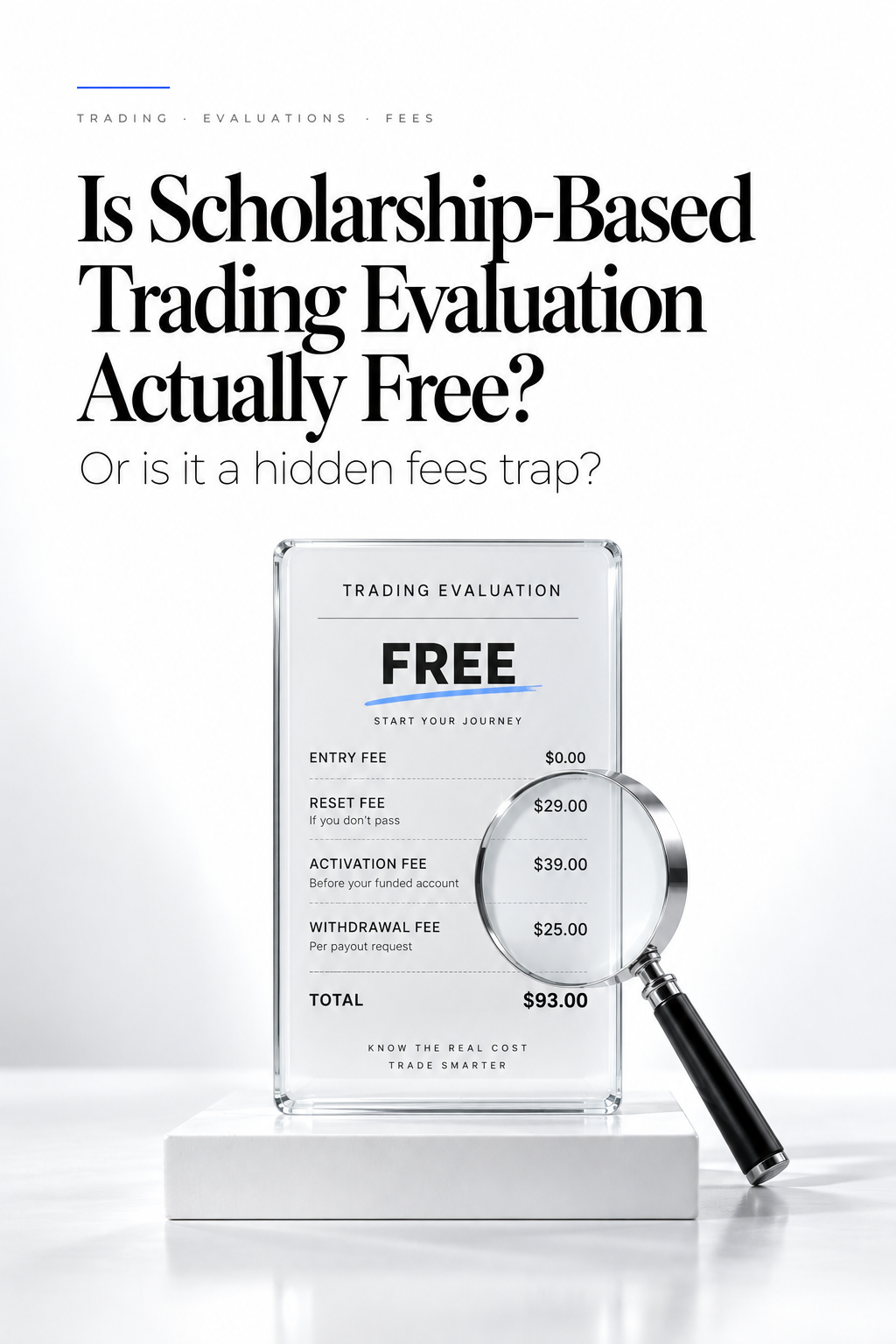
Start your evaluationIs Scholarship-Based Trading Evaluation Actually Free or a Hidden Fees Trap?
TL;DR: Scholarship-based trading evaluations are not free — you pay a small, transparent entry fee — but they are fundamentally different from platforms that hide costs in monthly subscriptions, re-attempt fees, and payout conditions buried in fine print.
Key takeaways:
- Legitimate scholarship-based evaluations charge a single upfront entry fee (as low as $5 / Rs.400) with no recurring costs.
- The "hidden fees trap" is real — many platforms charge monthly fees, add re-attempt fees, or set payout conditions that function as additional charges.
- A genuine scholarship model pays you a reward for passing the evaluation, not the other way around.
- PropScholar verifies and pays scholarships within 4 hours, with rules published publicly and never changed retroactively.
- The best way to verify any platform: check if its rules are public, whether it has a verifiable company registration, and whether real payout proof exists in an active community.
You've seen the phrase "scholarship-based trading evaluation" and your first instinct was probably skepticism. That's the right instinct. The online trading industry has a long history of rebranding the same expensive models with new words, and beginners in markets like Nigeria, Indonesia, the Philippines, and India are the most common targets.
So let me answer the question directly: no, scholarship-based evaluations are not free. But "not free" and "a hidden fees trap" are very different things. What separates them is transparency, structure, and what happens after you pay.
What Does "Scholarship-Based" Actually Mean?
A scholarship-based evaluation is a model where you pay a one-time entry fee, take a structured trading evaluation, and if you pass, you receive a scholarship — a cash reward that reflects your proven skill. You're not buying access to a funded account in the traditional sense. You're entering an evaluation where success is the trigger for a grant.
PropScholar works exactly this way. Entry fees start from $5 (roughly Rs.400), and successful traders can claim a scholarship of up to 400% of their entry fee. That payout happens within 4 hours of verification. There are no monthly platform fees, no recurring subscriptions, and no re-attempt fees buried in the terms. You pay once to enter, and that's the only cost the platform charges you.
That is the model at its cleanest. Now let's talk about where it gets murkier — because not every platform using the word "scholarship" actually runs this kind of model.
The Hidden Fees Trap: What It Actually Looks Like
The hidden fees trap in trading evaluations doesn't usually announce itself. It shows up in a few recognizable patterns:
Monthly subscription fees attached to the evaluation. Some platforms charge you a one-time entry fee AND a monthly subscription to maintain your evaluation account. Miss a payment and your progress resets. This turns a supposed evaluation into an indefinite subscription product.
Re-attempt fees without disclosure. You fail the evaluation. You want to try again. Only then do you discover that each re-attempt costs almost as much as the original entry. For a beginner in the Philippines paying in Pesos, or a trader in South Africa budgeting in Rand, this can quickly multiply the true cost several times over.
Payout conditions that function as hidden costs. These are the most insidious. A platform might advertise a scholarship payout but then apply conditions at withdrawal: minimum trading days beyond what was stated, profit splits that weren't clearly disclosed, or fees deducted at payout labeled as "processing charges."
Rules that change retroactively. This is a serious red flag. If a platform can change its evaluation rules after you've entered — adjusting drawdown limits, consistency rules, or payout thresholds — then the cost of your entry is no longer fixed. You might meet all the rules you agreed to and still fail against criteria that didn't exist when you started. PropScholar has never changed its evaluation rules retroactively in its 1.5+ years of operation. That's not a marketing claim — it's verifiable by checking the community. Our rules have been public and consistent from the beginning.
How to Calculate the Real Cost of Any Evaluation
Don't compare entry fees. Compare total cost across every realistic scenario. Here's how to think through it:
Scenario one: You pass on the first attempt. What did you actually pay? Entry fee only. For PropScholar, that's as low as $5. For many traditional prop-firm-style evaluations targeting the same beginner market, entry fees alone can run $50 to $200 or more, in USD, requiring international card payments or wire transfers that add their own conversion costs.
Scenario two: You fail and re-attempt once. Does the platform charge again? PropScholar's structure means you know the cost upfront. No surprise re-attempt invoices.
Scenario three: You pass but your payout is delayed or reduced. What percentage do you actually receive? Under what conditions? PropScholar pays scholarships of up to 400% within 4 hours of verification. That's a specific number with a specific timeline — not "competitive payouts processed as soon as possible."
This framework is something we wrote about in more depth in the article on how to compare prop evaluations by total cost, not entry fee. The short version: if a platform won't give you a complete cost breakdown across all three scenarios before you pay, that silence is your answer.
Is PropScholar's Model Actually Transparent?
Let me be direct here, because this is a question you should be asking about any platform including this one.
PropScholar is registered as a Private Limited company in India under the MCA. The company has been operating for over 1.5 years. Its rules are publicly published. Payout proof is verifiable inside a Discord community of over 3,000 traders. That's not a theoretical transparency claim — you can go to that community right now, before paying anything, and see what traders are discussing, what payouts look like, and what questions get answered.
Payments in India go through UPI via PhonePe, Razorpay, or Cashfree. For traders outside India — in Nigeria, the Philippines, Indonesia, South Africa, Vietnam, Pakistan, Bangladesh, Kenya, Egypt — the platform accepts crypto globally. This matters because one of the most common "hidden cost" problems for traders in emerging markets is the foreign currency conversion. If a platform only accepts USD via credit card, a trader in Lagos or Manila is already paying a premium before the evaluation even starts. A crypto payment path removes that friction.
PropScholar also explicitly isn't a prop firm. It doesn't manage or allocate institutional capital. It's a scholarship-based evaluation platform. That distinction isn't just legal language — it shapes everything about how payouts, rules, and the trader relationship are structured. If you want to understand more about how this differs from pay-after-pass models, the article on pay-after-pass funded trading and whether it actually exists covers that comparison well.
What Beginners in Emerging Markets Need to Check Before Paying
If you're a beginner in an emerging market, your margin for error is smaller. A $50 mistake might be manageable in some economies. In others, that's a week's disposable income. So the checklist matters more, not less.
Does the platform have a verifiable company registration?
Not a logo, not a testimonial. An actual registration you can look up. PropScholar is registered with the Indian Ministry of Corporate Affairs. That's a searchable public record.
Are the rules public before you pay?
Read them. Specifically, look for: drawdown limits, minimum trading days, consistency requirements, payout conditions, and what happens if you fail. If any of these are vague or missing, don't pay.
Is there a real community with real discussion?
A Discord or forum where people ask hard questions and get real answers is a meaningful signal. Fake communities are usually identifiable — low message volume, only positive posts, no one asking anything critical. PropScholar's Discord has over 3,000 members and active conversation. You can verify it yourself before spending a rupee or a naira.
Does the platform accept your local payment method without forcing currency conversion?
For Indian traders, UPI is the answer. For everyone else, crypto removes the international payment barrier. Read the article on why MTN Mobile Money funded trading in Ghana fails for most traders to understand how payment friction can kill access before evaluation even begins.
The Legitimate Case for Charging an Entry Fee
Some beginners arrive at this question from the opposite angle: "If this is a scholarship program, why is there any fee at all?"
It's a fair question. The entry fee serves a real function: it filters for traders who are serious and creates a cost signal that discourages random entries. Evaluation platforms — including PropScholar — need participants who actually intend to trade according to the rules, not bots or people gaming the system. A $5 entry is low enough that cost isn't a barrier for any genuine beginner, but it's enough to signal intent.
What the fee is NOT is a revenue extraction mechanism. The scholarship model only works if passing traders actually receive their scholarship. That's the core mechanic. If a platform consistently blocks or delays payouts, the model collapses — traders leave, communities talk, and the platform's reputation disintegrates. The 4-hour payout verification at PropScholar isn't a generous perk. It's structurally necessary for the model to be credible.
For context on how PropScholar's evaluation rules themselves are structured — particularly the difference between Standard and Plus plans regarding consistency rules and trailing drawdown — the article on Standard vs Plus evaluations goes into the specific mechanics.
Recognizing When "Scholarship" Is Just Marketing Language
Not every platform using the word scholarship is running a scholarship model. Here's how to tell:
If the platform calls its payout a "scholarship" but applies it toward a funded account credit rather than paying you actual money, that's not a scholarship — it's a discount on a product. If the "scholarship" is only accessible after you pay an additional onboarding or activation fee, the label is cosmetic. If payout timelines are undefined or tied to monthly cycles rather than verification completion, expect delays.
The word "scholarship" should mean: you demonstrated skill, we reward that skill with real money, paid on a clear and short timeline. That's it. Anything more complicated than that deserves more scrutiny before you hand over any amount, even $5.
PropScholar as the Reference Point
Here's what a scholarship-based evaluation model looks like when it's working correctly:
You visit the shop, see plans clearly priced from Rs.400 / $5, read the published rules before paying, pay via UPI or crypto depending on your location, take the evaluation, and if you pass, you submit for verification and receive your scholarship within 4 hours. The rules you agreed to are the rules you're evaluated against — they don't change after you enter. There are no monthly fees. There are no re-attempt charges unless you voluntarily purchase another evaluation. The platform is operated by a registered company you can verify.
That's the reference model. Stack any other platform against it and the comparison becomes clearer quickly.
If you have specific questions about an evaluation you're considering, or you want to understand how PropScholar's rules apply to your trading style or situation, you can also contact the team directly at business@propscholar.com. The platform offers 24/7 support in Hindi and multiple other languages — which again matters more than it sounds if you're a beginner trying to understand contract terms in your second or third language.
PropScholar is a scholarship-based trading evaluation platform operated by a Private Limited company registered in India. We are not a prop firm and do not manage or allocate institutional capital. Our model rewards proven trading skill with scholarship grants upon successful evaluation completion.
Related reading
- 1K1Step Explained: PropScholar's $1 One-Step Evaluation from Purchase to Payout
- $5 Prop Firm Challenge: What the Cheapest Legit Evaluation Really Gets You
- The Honest Alternative to No-Evaluation Instant Funding Offers
- Demo Trading vs Funded Evaluation: Which Actually Builds a Trading Career
- 1-Step vs 2-Step Evaluation: Which Is Right for a Beginner?
- Scholar Trading Explained: How It Works Step by Step
Ready to Prove Your Edge?
Join 500+ traders. Start from just $5. Get funded within days.
Frequently Asked Questions
It's not free — you pay a one-time entry fee, which at PropScholar starts from $5 (Rs.400). However, that's the only cost. There are no monthly fees, no re-attempt charges, and no hidden payout conditions. The hidden fees trap exists on other platforms that layer subscriptions, re-attempt costs, or vague withdrawal conditions on top of the initial entry. A legitimate scholarship model is transparent about every cost before you pay.
More From PropScholar

Trader Safety
Is Pay After Pass Legit or Not? The Honest Answer for 2026
11 min read
Evaluation Models
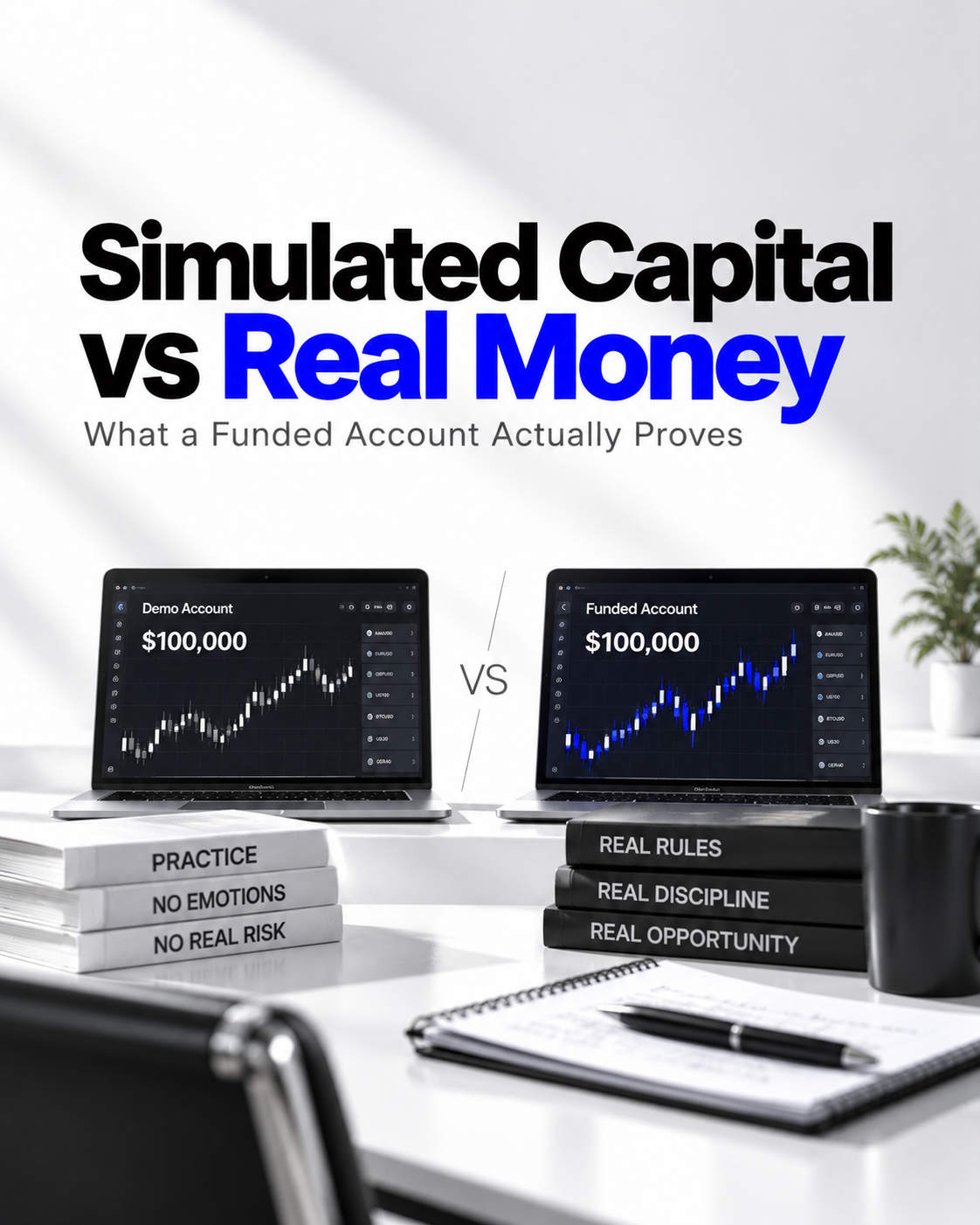
Simulated Capital vs Real Money: What a Funded Account Actually Proves
13 min read
Evaluation Models
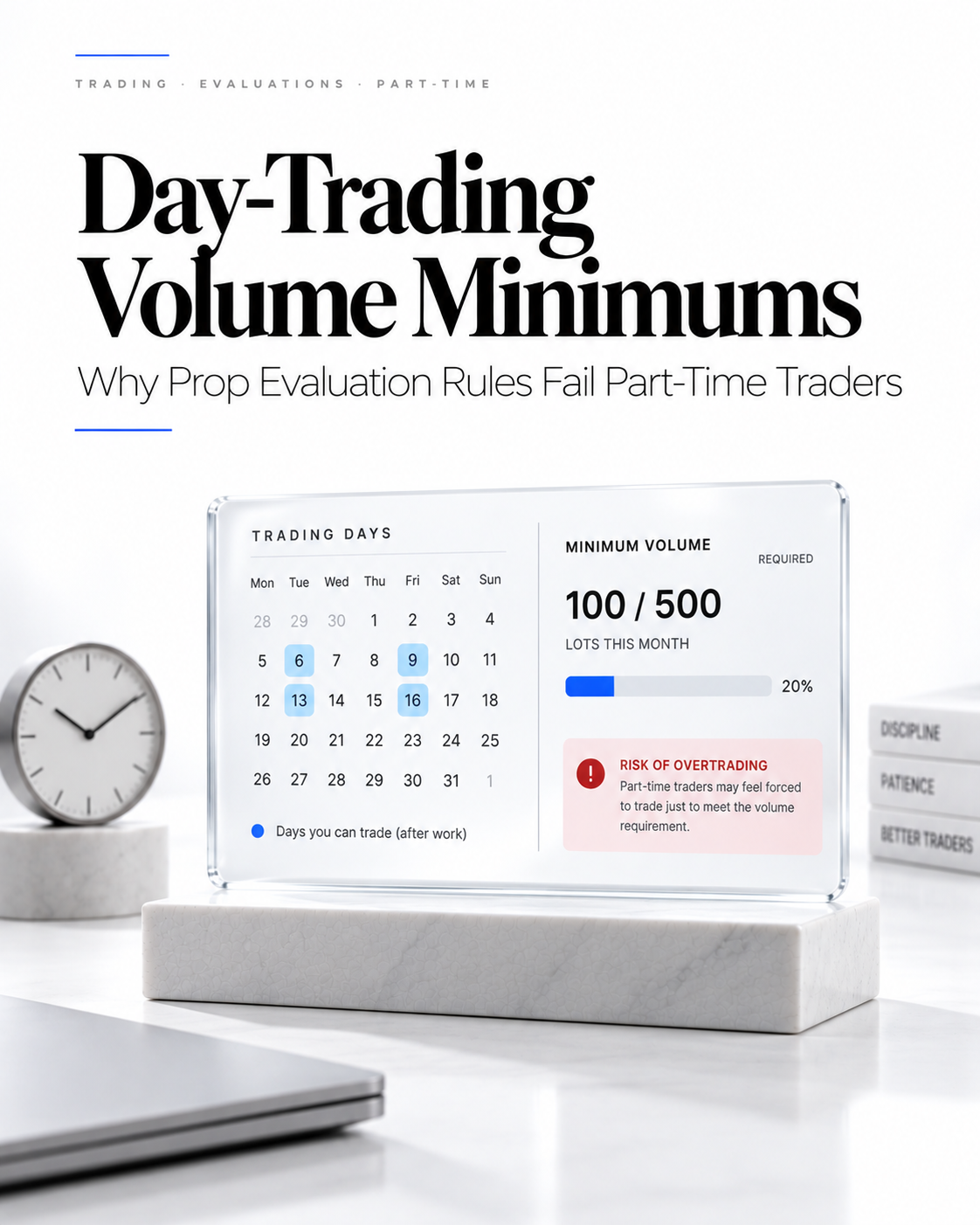
Part-Time Trader Evaluation Rules: What to Know in 2025
14 min read

Evaluation Models
Why PropScholar's 10% Target Is Easier Than Demo Consistency
12 min read

Beginner Trading
Prop Trading Evaluations Explained: What Beginners Actually Pay to Start
14 min read

Trader Support
Graduate With Campus Placement: Should You Start USDT Trading Before Your Job Begins?
12 min read