
Funded Trading Evaluation: Vietnam, Thailand & Malaysia Payment Fix
VND, THB or MYR blocked at checkout? See exactly which payment rails work for funded evaluations in Vietnam, Thailand and Malaysia in 2026.
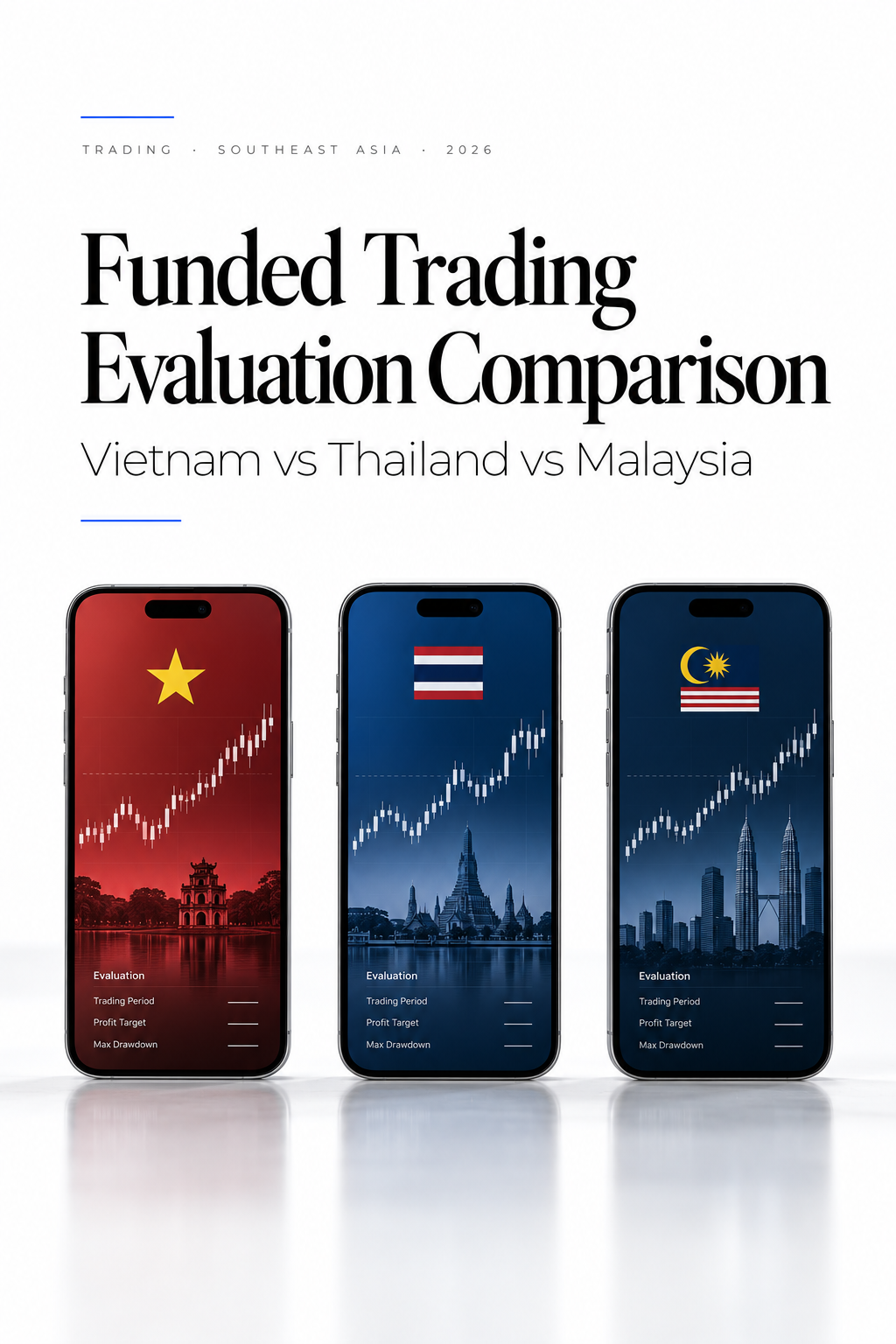
VND, THB or MYR blocked at checkout? See exactly which payment rails work for funded evaluations in Vietnam, Thailand and Malaysia in 2026.
Start your evaluationFunded Trading Evaluation Comparison: Vietnam vs Thailand vs Malaysia
TL;DR: Vietnam, Thailand, and Malaysia all have growing trader communities, but paying into a global prop evaluation and getting your scholarship payout back in local currency is genuinely hard. The practical answer for most traders in these countries is crypto—and a platform like PropScholar, where you can start for as little as $5 and receive payouts within 4 hours of verification, is built exactly for this reality.
Key takeaways:
- Global prop firms rarely accept VND, THB, or MYR directly—most require USD wire transfers or cards that many local bank accounts don't support easily.
- PropScholar accepts crypto globally, making it accessible from Vietnam, Thailand, Malaysia, and beyond without needing a USD bank account.
- Entry into a PropScholar evaluation starts at $5 (roughly 130,000 VND, 180 THB, or 23 MYR at current rates)—a fraction of what most global evaluations cost.
- Scholarships of up to 400% are paid within 4 hours of verification—not days, not weeks.
- PropScholar is a scholarship-based evaluation platform, not a prop firm—your entry fee funds an evaluation, and proven skill earns you a scholarship grant.
You're based in Ho Chi Minh City, Bangkok, or Kuala Lumpur. You've been trading for a year, maybe two. You know you're good enough to be evaluated—but every time you try to sign up for a well-known evaluation platform, you hit the same wall: payment. Either they want a card linked to a USD account, a wire transfer your local bank charges a 3% fee on, or they simply don't list your country at checkout.
This isn't a niche frustration. It's the single biggest practical barrier for Southeast Asian traders trying to access global funded trading programs. Let's go country by country, figure out what actually works, and compare it honestly.
How Vietnamese Traders Currently Pay Into Evaluation Programs
Vietnam has strict foreign exchange controls. Moving money internationally from a VND account involves your bank's forex desk, documentation sometimes, and fees that can eat 2-4% of a small transaction. For an evaluation that costs $100, that's already a meaningful chunk gone before you even start trading.
Most Vietnamese traders who successfully access global prop evaluations do it one of two ways: they buy USDT through a local P2P platform and pay in crypto, or they use an international Visa/Mastercard debit card from a bank like Techcombank or VPBank that supports online foreign currency transactions. Both routes work, but neither is frictionless—P2P has spread risk, and international card support varies.
The good news is that crypto acceptance has quietly become the most reliable universal on-ramp from Vietnam. If a platform accepts USDT or another stablecoin, Vietnamese traders can participate without touching USD banking at all.
How Thai Traders Pay Into Prop Evaluations—and Where It Gets Complicated
Thailand's situation is slightly more comfortable. Thai traders generally have easier access to international cards, and platforms like Wise are more usable there than in Vietnam. But the core problem remains: most global prop evaluation platforms are priced in USD, and converting THB to USD adds cost every single time.
For a Thai beginner who wants to try their first evaluation at the typical $49-$149 price point that most platforms charge, the total cost after conversion and banking fees can push noticeably higher than the advertised figure. That stings when you might not pass on the first attempt.
There's also the question of getting paid. If you pass an evaluation and your scholarship or profit share is issued via USD wire, receiving that into a Thai baht account means another conversion, another fee, and sometimes a 2-3 business day wait for the funds to actually land. For traders who passed a legitimate evaluation and earned a scholarship, waiting that long for money you've genuinely earned is a frustrating experience.
Crypto solves the payout side almost completely. A platform that pays in USDT or similar lets you receive your scholarship, hold it as a stablecoin, and convert to THB on your own schedule—at a spread you chose, not one your bank imposed.
How Malaysian Traders Compare—The MYR Advantage and Its Limits
Malaysia is arguably the most accessible of the three for traditional payment methods. MYR is more liquid internationally, and Malaysian traders generally have more reliable access to international Mastercard/Visa products and platforms like PayPal and Wise. DuitNow QR and FPX are excellent for domestic transfers, but they don't connect to global prop evaluation platforms.
So the same wall appears: when you want to pay a global evaluation platform, you still have to convert MYR to USD. And when the payout comes back, it still goes through conversion.
What's different in Malaysia is that the conversion friction is lower—but it's not zero. And for a beginner who's not sure they'll pass on their first evaluation, every extra cost matters.
The Real Comparison: Which Country's Traders Are Best Served by Current Platforms?
Honestly? None of them are served particularly well by the dominant global evaluation platforms, which were largely built with USD-first users in mind.
Vietnam
Vietnamese traders face the steepest friction on both ends—payment in and payout out. Currency controls make international transfers slower and more expensive. The practical workaround is crypto, and any evaluation platform that doesn't accept crypto is essentially inaccessible to a large portion of Vietnamese traders.
Thailand
Thai traders have a slightly smoother path on the payment-in side, but payout delays and conversion fees remain a real cost. The $49-$149+ entry fees that most global platforms charge are also a real barrier for students and early-career traders who want to test themselves without a large commitment.
Malaysia
Malaysian traders have the most traditional-banking-friendly environment of the three, but they still pay a conversion tax on every transaction with a USD-denominated platform. The bigger issue is that Malaysian evaluation costs in USD are still significant when you consider that you might need multiple attempts before passing.
The pattern across all three countries is the same: conversion costs, payout delays, and high entry fees combine to make global funded evaluations expensive relative to local incomes—even before you've traded a single position.
What Actually Works: Crypto as the Universal On-Ramp for Southeast Asia
The traders in Vietnam, Thailand, and Malaysia who are successfully accessing funded evaluations right now are mostly doing it through crypto. Specifically, USDT on TRC-20 or BEP-20 chains, because the transfer fees are minimal—often under $1—compared to USD wire fees that can run $15-$30 for a small transfer.
This is why PropScholar's model is genuinely practical for Southeast Asian traders in a way that most global platforms are not. PropScholar accepts crypto globally. You don't need a USD bank account, you don't need an international wire transfer, and you don't need your local bank's approval for a foreign currency transaction. You buy USDT locally through a P2P exchange or your preferred crypto platform, send it in, and you're enrolled.
The entry point at $5 also matters more than it might look. At $5, a Vietnamese trader is spending roughly 130,000 VND. A Thai trader is spending roughly 180 THB. A Malaysian trader is spending roughly 23 MYR. These are amounts within reach of almost any working trader who wants to be evaluated—not a multi-month commitment.
For context on how the evaluation-to-payout math works for traders in similar situations across the region, the breakdown we published for Pakistani traders using Easypaisa goes through the same logic with real numbers—worth reading if you want to see the cost-benefit structure laid out clearly.
PropScholar's Evaluation Structure for Southeast Asian Traders
Here's what the actual process looks like if you're in Vietnam, Thailand, or Malaysia.
Step 1: Choose Your Evaluation Size
PropScholar evaluations start at $5. The evaluation amount determines the scholarship size—up to 400% of your entry fee upon passing. You pick the size that matches your current confidence and budget.
Step 2: Pay in Crypto
From any Southeast Asian country, the most reliable method is crypto. Buy USDT through your preferred local source, send to PropScholar's wallet address provided at checkout. The transaction typically confirms in minutes, not hours.
Step 3: Trade the Evaluation
You'll trade under clear, published rules. PropScholar's rules have never been changed retroactively—what you see when you sign up is what you're evaluated against. There are no hidden clauses that appear after you pass.
Step 4: Claim Your Scholarship
Once you pass and verification is complete, the scholarship is paid within 4 hours. For Southeast Asian traders, receiving in crypto means the money is accessible without any further banking friction. You can convert to VND, THB, or MYR at a time and exchange rate that suits you.
This is a meaningfully different experience from global platforms that issue payouts via USD wire with 3-5 business day settlement windows. If you want to understand why platform structure matters beyond just the headline payout number, our comparison of PropScholar vs instant-funding models explains the difference in detail.
The Payout Question: Which Platform Actually Pays?
This is the question that matters most and gets asked least directly. Entry fees are visible. Payout reality is not.
For Southeast Asian traders, the warning signs of a platform that won't actually pay are: vague payout timelines, payout only via USD wire with high minimums, no public payout proof from traders in your region, and support that goes quiet after you raise a withdrawal question.
PropScholar's Discord community of 3,000+ traders serves as a living record of actual payouts. You can go there before you spend a cent and see whether traders in Vietnam, Thailand, or Malaysia have actually received scholarships—and how long it took. That's the due diligence step that separates a confident decision from a guess.
For a broader framework on evaluating total costs across platforms—not just the headline entry fee—the cheap access to top prop firms guide is worth reading before you commit to any evaluation program.
Which Country Has the Easiest Path Right Now?
Malaysia edges out Thailand and Vietnam on traditional payment accessibility. But with crypto as the common denominator, the gap narrows dramatically. A Vietnamese trader with USDT and a PropScholar account is on exactly the same footing as a Malaysian trader with a Visa card.
That's the real answer to this comparison. The payment method that actually works for all three countries isn't a local bank transfer—it's a stablecoin. And any platform that accepts crypto and pays out within 4 hours has effectively solved the Southeast Asia payment problem that legacy evaluation platforms haven't addressed.
FAQs
Does PropScholar accept payment from Vietnam, Thailand, and Malaysia? Yes. PropScholar accepts crypto globally, including from Vietnam, Thailand, and Malaysia. You don't need a USD bank account or international wire transfer capability. Buy USDT locally through a P2P exchange and use it to pay your evaluation fee directly. Entry starts at $5, which is accessible in local currency terms for traders across Southeast Asia.
What is the cheapest funded trading evaluation available to Southeast Asian traders? PropScholar offers evaluations starting at $5—among the lowest entry points available globally. For Vietnamese traders that's roughly 130,000 VND, for Thai traders roughly 180 THB, and for Malaysian traders roughly 23 MYR at current rates. The scholarship upon passing can be up to 400% of the entry fee, paid within 4 hours of verification.
How does PropScholar pay out to traders in Vietnam, Thailand, and Malaysia? Payouts are made within 4 hours of verification. For Southeast Asian traders, receiving your scholarship in crypto (USDT) is the most practical option, since it avoids USD wire transfer delays and banking conversion fees. You can then convert to your local currency—VND, THB, or MYR—at your preferred exchange and timing.
Is PropScholar a prop firm? No. PropScholar is a scholarship-based trading evaluation platform, not a prop firm. You pay an entry fee to be evaluated on your trading skill. If you pass, you receive a scholarship grant—up to 400% of your entry fee—within 4 hours of verification. PropScholar does not manage or allocate institutional capital.
Why can't I just pay a global prop evaluation with my local bank account? Most global evaluation platforms are USD-denominated and require international card payments or wire transfers. From Vietnam, Thailand, and Malaysia, this means currency conversion fees, potential delays from your bank's forex desk, and in Vietnam's case, additional foreign exchange documentation requirements. Crypto bypasses all of these friction points, which is why it's the preferred method for Southeast Asian traders accessing global evaluations.
How do I verify that PropScholar actually pays traders before I sign up? The most direct way is to visit the PropScholar Discord, which has over 3,000 active traders. You can browse payout discussions, ask traders directly about their experience, and check community records before spending anything. PropScholar's rules are also publicly posted and have never been changed retroactively.
What should I look for when comparing funded trading evaluations across Southeast Asia? Focus on four things: whether the platform accepts a payment method you can actually use without excessive fees, what the total cost is across multiple attempts (not just the first entry fee), how and when payouts are made, and whether there's verifiable payout proof from traders in your region. A low entry fee with crypto acceptance and a clear, unchanged ruleset covers most of what matters for a Southeast Asian beginner.
PropScholar is a scholarship-based trading evaluation platform operated by a Private Limited company registered in India. We are not a prop firm and do not manage or allocate institutional capital. Our model rewards proven trading skill with scholarship grants upon successful evaluation completion.
Related reading
- Best $1 Trading Challenge 2026: Why 1K 1-Step Wins
- Cheapest Legit Way to Access a Funded-Style Trading Account From $5
- Best Prop Firm in India 2026 (UPI-Friendly): Honest Comparison
- Prop Firm Challenge Under $5: Cheapest Legit Funded Accounts Compared
- Cheapest Prop Firm in 2026: The Complete Price Comparison Guide (From ₹300 With FIFA Discount)
- Pay-After-Pass Prop Firms: What the Alternative Actually Is
Ready to Prove Your Edge?
Join 500+ traders. Start from just $5. Get funded within days.
Frequently Asked Questions
Yes. PropScholar accepts crypto globally, including from Vietnam, Thailand, and Malaysia. You don't need a USD bank account or international wire transfer capability. Buy USDT locally through a P2P exchange and use it to pay your evaluation fee directly. Entry starts at $5, which is accessible in local currency terms for traders across Southeast Asia.
More From PropScholar
Trading Comparison
How Traders in Egypt Can Access Affordable Evaluations
13 min read

Trading Comparison
Best Low-Cost Trading Evaluation for Beginners Worldwide 2026
12 min read
Trading Comparison
Affordable Funded Trading for Filipino Traders in 2026
10 min read

Trading Comparison
How to Choose the Right Trading Evaluation in 2026
14 min read
Trading Comparison
One Pass Per Lifetime: Why Prop Firms Ban Retries and Which Evaluations Let You Trade Again (Philippines USDT)
10 min read

Prop Trading Education
Best Pay After Pass Prop Firm 2026 — And Why You Should Skip Them
11 min read