
Prop Firm Withdrawal Denied: What to Do When a Platform Won't Pay
Your evaluation passed, your profit is sitting there, and the platform is ghosting you or throwing up excuses. Here's exactly what to do when a prop firm denies your withdrawal — and how to avoid ever ending up in this situation again.
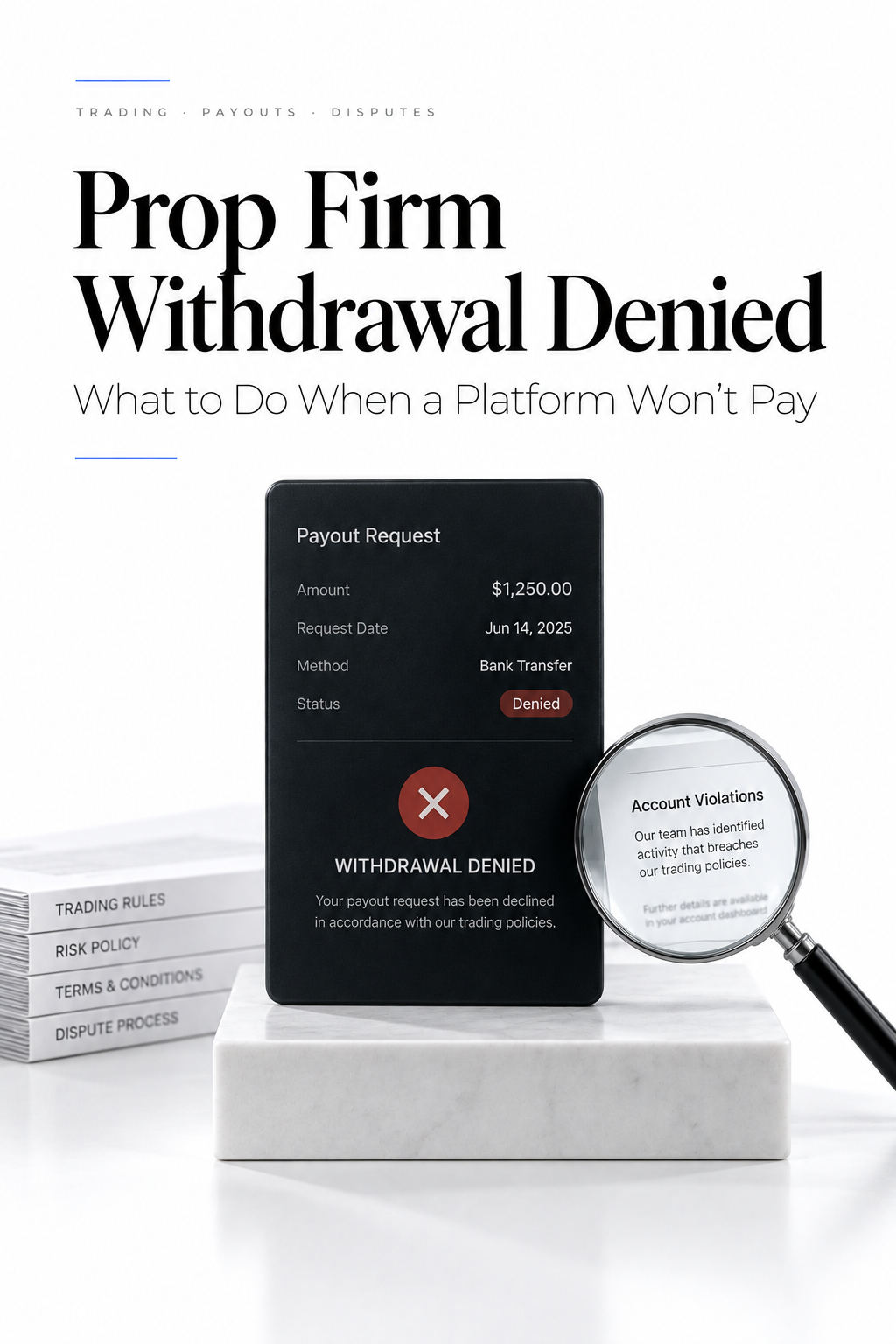
Your evaluation passed, your profit is sitting there, and the platform is ghosting you or throwing up excuses. Here's exactly what to do when a prop firm denies your withdrawal — and how to avoid ever ending up in this situation again.
Start your evaluationProp Firm Withdrawal Denied: What to Do When a Platform Won't Pay
TL;DR: A denied withdrawal is either a rules issue you can fix, a platform problem you can escalate, or a warning sign you need to act on fast. Here's the full playbook.
Key takeaways:
- Most denials fall into one of three categories: a rule you unknowingly broke, a payment processing issue, or a platform that never intended to pay.
- Your first move is always to read the denial reason in writing — vague responses are a red flag on their own.
- Document everything: screenshots, emails, chat logs, timestamps.
- Legitimate platforms like PropScholar pay verified scholars within 4 hours and publish their rules publicly without changing them retroactively.
- If a platform is stonewalling, there are escalation paths — including your payment provider, community reporting, and regulatory bodies.
You passed the evaluation. You hit the profit target, stayed within drawdown, followed what you thought were the rules. Then you requested your withdrawal — and got nothing. Or worse, you got a one-line rejection with no real explanation.
This happens more than most people in the funded trading space will admit. And it happens to traders across every market — Nigeria, India, the Philippines, South Africa, Indonesia. The geography doesn't matter. The pattern does.
So let's talk about what's actually happening and what you can do about it right now.
Why Do Prop Firms Deny Withdrawals?
Before you assume the worst, know this: not every denial is a scam. Some are legitimate rule violations the trader genuinely missed. Others are payment processing delays that get resolved. But some — and you need to take this seriously — are structural. The platform was never really going to pay.
Here are the most common real reasons a withdrawal gets denied:
You triggered a rule you didn't fully read. Many evaluation platforms have clauses buried in their terms — consistency rules, minimum trading day requirements, restrictions on holding positions over weekends or news events. If you violated any of these, even unintentionally, a denial can be technically legitimate even if it feels unfair.
The platform is using vague language to stall. Some platforms issue denials with language like "suspicious trading activity" or "strategy review pending" without ever defining what that means. This is a stalling tactic, not a reason.
Payment processing is genuinely delayed. International wire transfers can take 5-7 business days. Crypto payouts can be held for compliance checks. These are annoying but usually resolve with follow-up.
The platform is insolvent or operating in bad faith. This is the hardest truth. Some evaluation companies collect entry fees, run fine — then when real payout pressure hits, they find technicalities to avoid paying. This is not rare.
Step One: Get the Denial in Writing
If your withdrawal was denied verbally, through a vague dashboard status, or via a support chat with no paper trail — your first job is to get a written explanation. Send an email to their official support or business address. Ask for:
- The specific rule or clause your withdrawal violated
- The exact date and time of the violation
- A reference to the relevant section in their publicly published terms
Don't escalate aggressively yet. Keep the tone professional. You want a paper trail that shows you asked reasonable questions and they either answered or didn't.
Step Two: Audit Your Own Trade History Against Their Rules
This is uncomfortable, but do it honestly. Pull your full trade history and cross-check it against their published rules — not what you remember the rules saying, but what they actually say right now.
Look specifically for:
- Did you trade on restricted news events?
- Did you meet the minimum number of trading days?
- Was there any position held overnight or over the weekend if that was prohibited?
- Did you copy trades from an external signal service they prohibit?
- Did your lot sizing trigger any consistency clause?
If your audit shows you followed the rules cleanly, your case is strong. Document that clearly.
Step Three: Escalate Through Every Available Channel
Once you have your written denial and your own audit, it's time to escalate. Here's the order:
Email their official business address — not just support chat. A formal complaint to a business email creates a more serious paper trail.
Post in their community or Discord. Legitimate platforms monitor their communities. A calm, factual post describing your situation (with evidence) often gets faster resolution than a support ticket. It also alerts other traders to watch for the same issue.
Report in trusted third-party communities. Trading communities — including PropScholar's own Discord with 3,000+ active traders — often have threads specifically for sharing payout experiences. Join the PropScholar Discord to see real payout discussions, not curated testimonials.
Contact your payment provider. If you paid your entry fee via credit card, some jurisdictions allow chargebacks on services not rendered. Crypto payments are generally non-reversible, but your payment processor may have a dispute mechanism. In Nigeria, if you paid via bank transfer, the CBN has a consumer protection channel. For broader payout issues in emerging markets, read our breakdown of OPay vs bank transfer for prop firm payouts in Nigeria for how payment method affects your options.
Report to regulatory or consumer bodies if the amount is significant. In India, this means the consumer court or MCA. In other jurisdictions, check your local financial conduct authority or consumer protection regulator.
Red Flags to Watch for Before You Ever Join a Platform
The best time to avoid a denied withdrawal is before you pay the entry fee. Here's what actually matters:
Rules That Are Public, Fixed, and Specific
A trustworthy platform publishes its evaluation rules in full, before you pay — and doesn't change them retroactively. If you can't find the exact drawdown limits, profit targets, minimum trading days, and payout conditions before handing over money, walk away.
A Real Payout Timeline With a Specific Number
Vague promises like "fast payouts" or "prompt processing" are meaningless. Ask: what is the exact maximum time from withdrawal request to funds received? Legitimate platforms give you a number. PropScholar, for example, pays scholars within 4 hours of verification — that's a specific commitment, not a marketing phrase.
Community-Verified Payout Proof
Screenshots on a platform's own website prove nothing. What matters is payout proof posted by independent traders in external communities — Discord servers, Reddit threads, Telegram groups — where the platform can't curate the results. Look for variety in the proof: different traders, different dates, different amounts.
No Retroactive Rule Changes
This one is critical. Some platforms quietly update their terms after traders pass, adding new clauses that conveniently apply to the trades that just earned a payout. Check whether the platform's community has any history of this. One complaint about a retroactive rule change is a data point; multiple complaints is a pattern.
How PropScholar Handles Payouts Differently
PropScholar is a scholarship-based trading evaluation platform, not a prop firm. That distinction matters for payouts.
When you pass a PropScholar evaluation, you're claiming a scholarship — not requesting a profit split from a trading desk. The scholarship amount can be up to 400% of your entry fee, and payment happens within 4 hours of verification. There's no "under review" limbo, no vague compliance holds, no retroactive rule changes.
Rules Are Published and Never Changed Retroactively
Every evaluation condition — drawdown limits, profit targets, trading day minimums — is published before you pay and stays fixed. This isn't a marketing claim; it's how the platform has operated for over 1.5 years with no documented retroactive rule changes.
Entry Fee From $5
The starting evaluation costs $5 (around Rs.400 for Indian traders). That means the financial exposure if something goes wrong is genuinely low — which is a different risk profile than committing hundreds of dollars to a platform you haven't verified yet.
Global Access via Crypto
For traders in Nigeria, the Philippines, Indonesia, Egypt, Kenya, or anywhere else where international payment options are limited, PropScholar accepts crypto globally. You don't need a specific local payment method. Explore the evaluation options here and see which fits your budget.
Real Community, Real Payout Proof
The PropScholar Discord has 3,000+ traders. Payout discussions happen there in real time — unfiltered, from actual traders. That's the kind of evidence that matters when you're deciding where to put your entry fee.
What to Do If the Platform Simply Won't Pay
If you've exhausted every escalation channel and the platform is still stonewalling, here's the hard reality: at a certain point, you're dealing with a bad-faith operator, and the energy you spend chasing them has a cost too.
Your most useful next steps:
Document and publish your experience factually in public trading communities. Don't name-call or speculate — just state the facts, the timeline, and the evidence. This protects other traders and creates a searchable record.
If the entry fee was paid by a method with chargeback rights, pursue that through your payment provider. Success varies by region and payment method — for Egypt-specific payment dynamics, our article on bank transfer vs Vodafone Cash for prop firm payments covers how method choice affects your options.
Contact business@propscholar.com if you want guidance on what a legitimate evaluation process should look like — we're happy to point you in the right direction even if you haven't used PropScholar before.
And going forward: choose platforms where your exposure is low, rules are explicit, and payout proof comes from independent sources. That's not luck — it's a decision you make before you pay the first dollar.
FAQs
What should I do first if a prop firm denies my withdrawal? Request the denial reason in writing immediately. Ask for the specific rule you violated, the exact clause in their terms, and the date of the alleged violation. A legitimate platform will give you a clear, documented answer. Vague responses or silence are themselves useful data — they tell you the platform isn't operating transparently.
Can a prop firm legally refuse to pay my profits? If you violated a clearly published rule, a refusal can be technically within their terms. However, if the rule was buried, vague, or added retroactively after your trade, you have grounds to dispute. Laws vary by country, but consumer protection regulations in most jurisdictions cover services paid for and not delivered. Document everything and escalate formally.
How do I spot a prop firm withdrawal scam before joining? Look for three things: rules that are fully public and specific before you pay, a payout timeline with a real number (not vague language), and payout proof posted by independent traders in external communities — not testimonials on the platform's own site. Platforms that change rules after traders pass are a documented warning sign.
What payment methods give me the best protection if a prop firm doesn't pay? Credit card payments in many jurisdictions allow chargebacks for services not rendered — that gives you a recovery option. Crypto payments are generally non-reversible, so they carry more risk if a platform acts in bad faith. Your local payment method options matter too; the right choice depends on your country. For Nigeria-specific guidance, see our breakdown of OPay vs bank transfer for prop firm payouts.
Is PropScholar a legitimate platform that actually pays? PropScholar is a scholarship-based trading evaluation platform registered as a Private Limited company in India, operating for over 1.5 years. Scholarships of up to 400% of the entry fee are paid within 4 hours of verification. Rules are published publicly and have never been changed retroactively. Payout proof is discussed openly in a Discord community of 3,000+ active traders.
What if I genuinely broke a rule — can I still appeal a denied withdrawal? Yes, and it's worth doing. Appeal on grounds of clarity — was the rule clearly explained before you paid? Was it consistently applied to other traders? Was it proportionate to the violation? Even a technically legitimate denial can be worth pushing back on if the rule wasn't communicated clearly. Keep your appeal professional and evidence-based.
How long should a legitimate prop firm or evaluation platform take to process a payout? Reasonable timelines vary: crypto can settle same-day, bank transfers may take 2-5 business days depending on the region, and some platforms hold a brief compliance review. What's not acceptable is indefinite "under review" status with no timeline given. PropScholar pays scholars within 4 hours of verification — use that as a benchmark when evaluating any platform.
PropScholar is a scholarship-based trading evaluation platform operated by a Private Limited company registered in India. We are not a prop firm and do not manage or allocate institutional capital. Our model rewards proven trading skill with scholarship grants upon successful evaluation completion.
Related reading
- Best Prop Firm You Can Pay With UPI in 2026
- Cheap Prop Firm You Can Pay With UPI in India (2026)
- Best Prop Firm You Can Pay With PayPal (No Crypto Needed)
- Crypto USDT vs Card Payment: Which Payout Route Is Actually Faster in 2026
- Best UPI-Friendly Trading Evaluation for Indian Beginners 2026
- Can You Pay for a Trading Evaluation With Crypto? A Global Guide
Ready to Prove Your Edge?
Join 500+ traders. Start from just $5. Get funded within days.
Frequently Asked Questions
Request the denial reason in writing immediately. Ask for the specific rule you violated, the exact clause in their terms, and the date of the alleged violation. A legitimate platform will give you a clear, documented answer. Vague responses or silence are themselves useful data — they tell you the platform isn't operating transparently.
More From PropScholar

Prop Trading Education
Best Pay After Pass Prop Firm 2026 — And Why You Should Skip Them
11 min read
Trader Safety
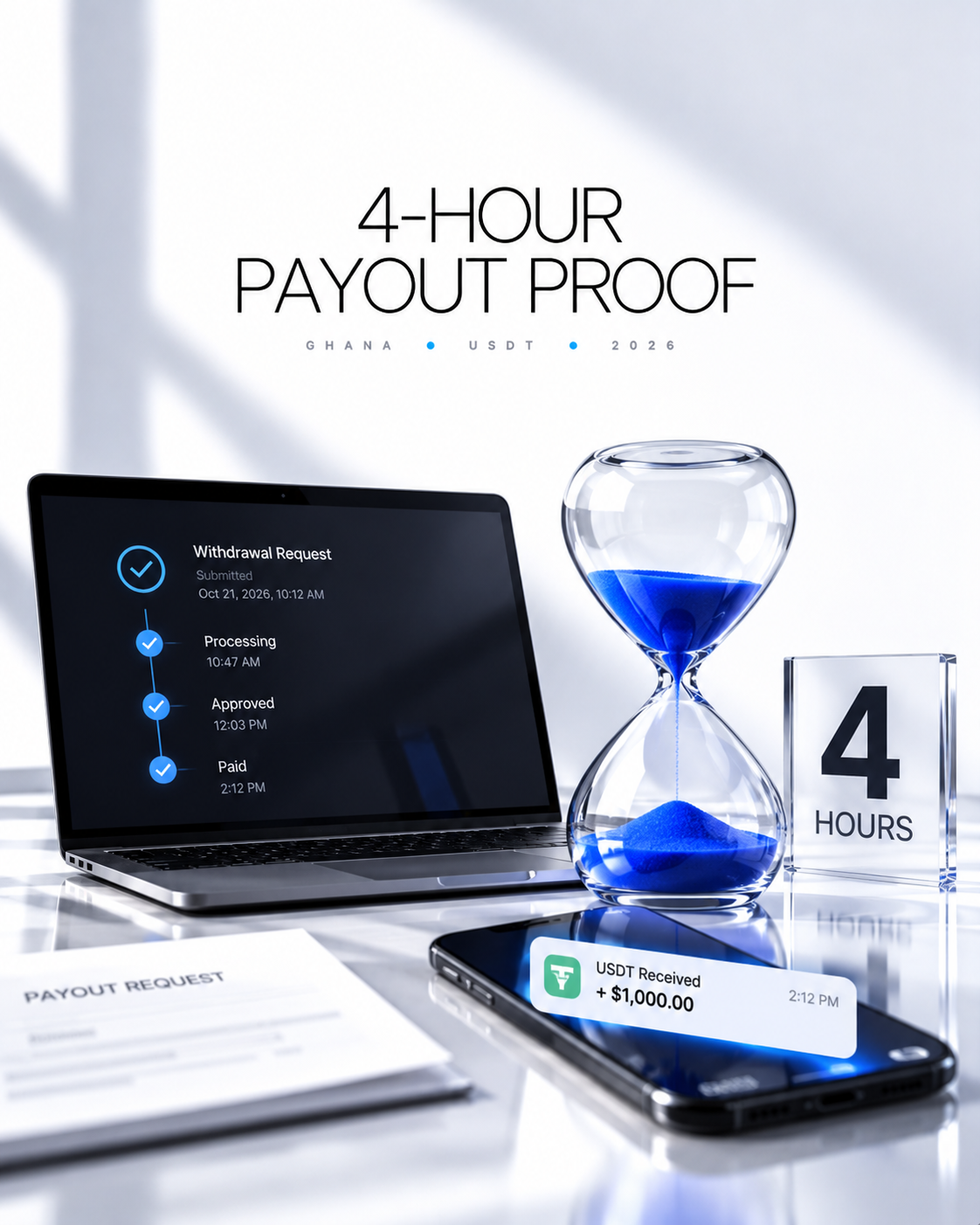
Why Prop Firms Promise Instant Payouts but PropScholar Publishes 4-Hour Proof Instead (Ghana USDT 2026)
10 min read
Payments
USDT vs Instant Crypto Payouts: Which Funded Trading Platform Pays Fastest to South African Traders?
12 min read
Payments
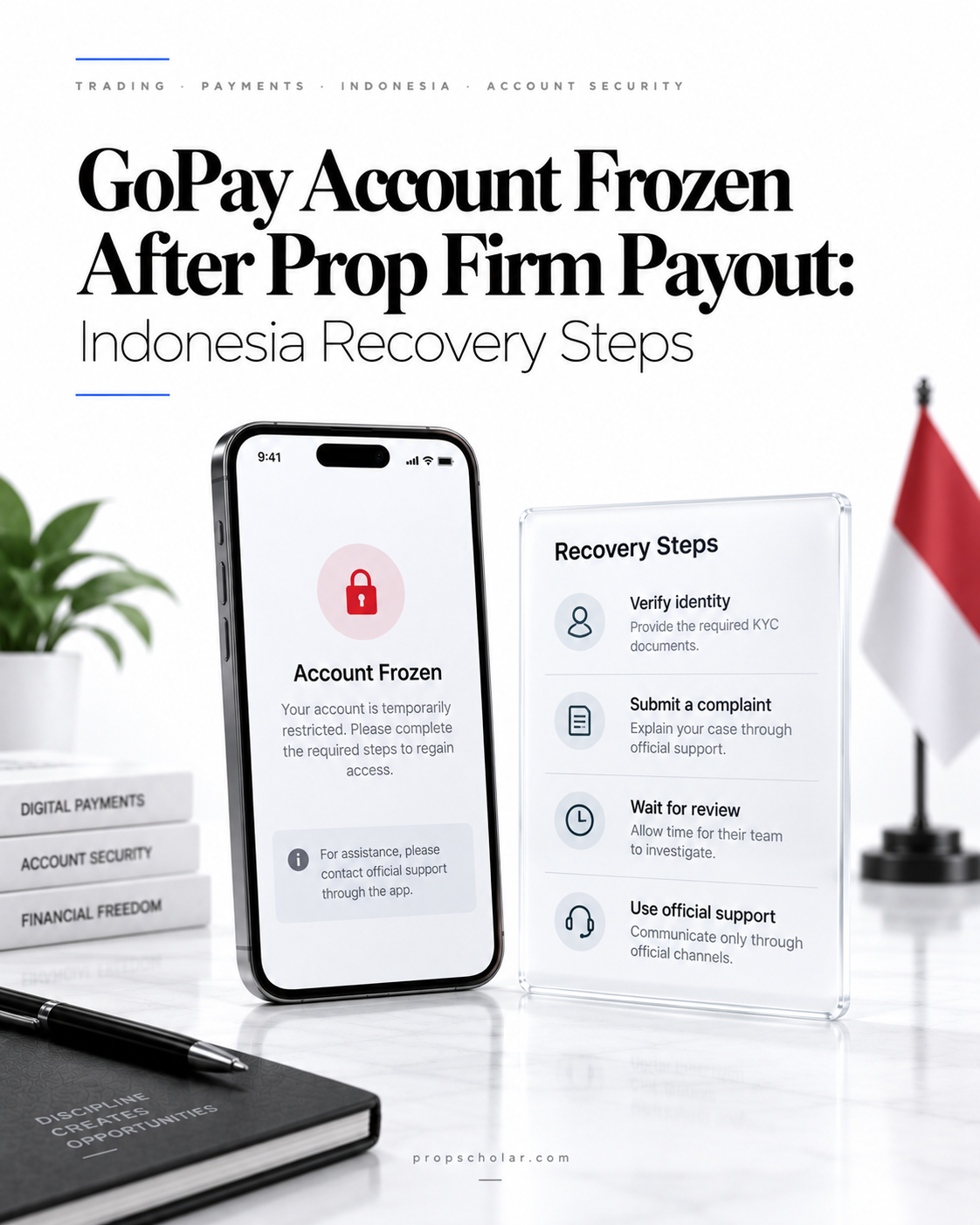
GoPay Account Frozen After Prop Firm Payout: Indonesia Recovery Steps
15 min read

Payments
Pay After You Pass: PropScholar's ₹400 UPI Entry + 10% Target for Broke College Traders (2026)
14 min read

Payments
How to Access Top-Tier Prop Firm Accounts Without Paying in USD
8 min read